







What's Happening?
The global green economy has reached a record $10 trillion, outpacing the wider market in 2025, according to a report by LSEG. Green revenues grew at their fastest rate since 2022, rising 5.3% to $5.5 trillion. The green economy now ranks as the third-largest
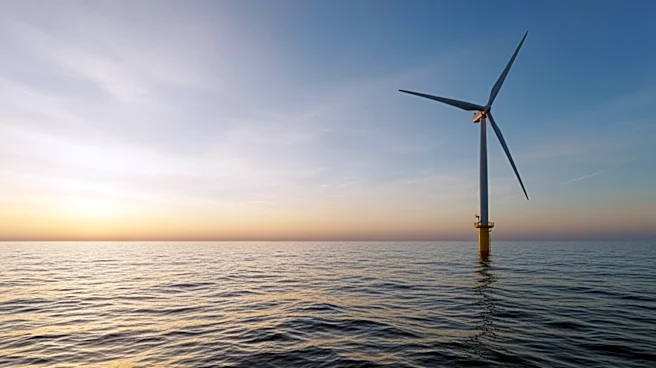
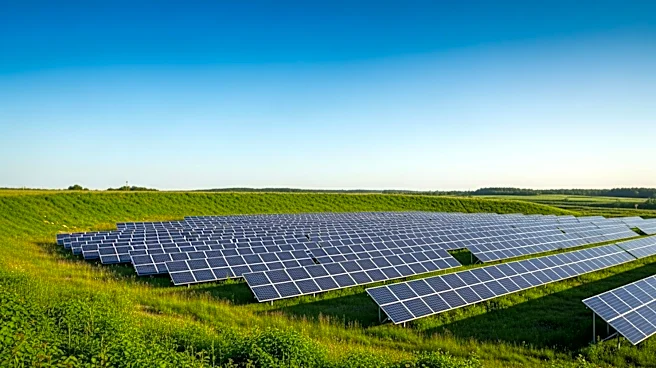
sector globally, behind technology and industrials. This growth is driven by increased investment in renewable energy, energy efficiency, and green technologies. The report highlights the performance of companies in the FTSE EOAS Index, which saw greater returns than the broader market. Despite geopolitical tensions and energy volatility, the green economy continues to expand, with significant contributions from electric vehicles and clean energy investments.
Why It's Important?
The expansion of the green economy represents a significant shift towards sustainable development and environmental responsibility. As countries and companies invest in green technologies, they contribute to reducing carbon emissions and mitigating climate change impacts. The growth of the green economy also presents opportunities for investors seeking to align their portfolios with sustainability goals. Companies with high green revenues are outperforming their non-green counterparts, indicating the financial viability of sustainable investments. This trend may encourage further investments in green technologies and drive innovation in sectors such as renewable energy and electric vehicles.
What's Next?
The continued growth of the green economy is likely to lead to increased investments in renewable energy and sustainable technologies. As the sector expands, stakeholders may focus on overcoming challenges such as regulatory barriers and market competition. The development of new green products and services could drive further innovation and create new revenue streams for companies. Policymakers may also consider implementing supportive measures to facilitate the transition to a green economy, such as subsidies and incentives for sustainable practices.
Beyond the Headlines
The rise of the green economy has broader implications for global economic and environmental policies. As countries prioritize sustainability, they may need to address issues such as energy security and resource management. The transition to a green economy also raises ethical considerations, such as the equitable distribution of resources and the impact on communities reliant on traditional industries. Understanding these dynamics is crucial for stakeholders seeking to balance economic growth with environmental responsibility.