






What's Happening?
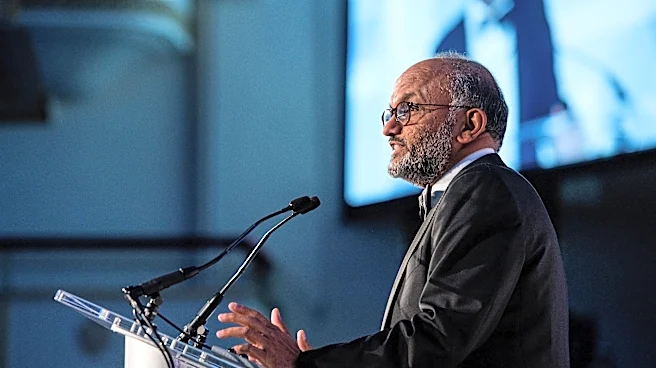
Shantanu Narayen, the current Chief Executive Officer of Adobe Inc., is anticipated to step down from his CEO position. He is expected to transition into the role of executive chair, with Anil Chakravarthy slated to succeed him as chief executive. This
leadership change comes as Adobe faces a period of decelerating growth and questions regarding the impact of AI-first offerings on its core business momentum. The company, a leader in digital media and digital experience software, generates approximately $26 billion in trailing revenue. Despite strong cash flow, Adobe's stock has underperformed the broader market over the past year, falling significantly from its 52-week high. Sentiment has been further impacted by mixed analyst views, including an 'Underperform' rating from Bank of America, and ongoing debates about whether AI features will cannibalize existing subscriptions or attract new paid users.
Why It's Important?
This leadership transition at Adobe is significant for the technology and business sectors, particularly given the company's prominent role in creative and digital marketing software. A change at the helm of a major tech company like Adobe can signal a shift in strategic direction, especially as the industry grapples with the rapid evolution of artificial intelligence. Investors will be closely watching how the new leadership addresses concerns about slowing growth and the monetization of AI. The transition could either stabilize investor confidence by bringing fresh perspectives to these challenges or introduce further uncertainty if the market perceives it as a response to underlying issues. For the broader software industry, Adobe's approach to integrating AI and managing leadership changes will serve as a case study, influencing how other companies navigate similar transitions and technological shifts. The outcome could impact competitive dynamics within the digital media space and set precedents for executive succession in large technology firms.
What's Next?
Following the anticipated transition, Anil Chakravarthy will assume the role of chief executive, and Shantanu Narayen will become executive chair. The immediate focus for the new leadership will likely be to address the decelerating growth profile and clarify Adobe's strategy for AI-first offerings. The company will need to demonstrate how these new AI features can drive revenue growth rather than merely cannibalizing existing subscription tiers. Investors and analysts will be looking for clear communication regarding strategic priorities, financial projections, and plans to boost market confidence. The market's reaction to this leadership change and the subsequent strategic announcements will be crucial in determining Adobe's stock performance and its competitive standing in the evolving software landscape. Future earnings reports and guidance will provide further insights into the effectiveness of the new leadership's initiatives.
Beyond the Headlines
The leadership change at Adobe underscores a broader trend within the technology industry where established giants are navigating the disruptive potential of artificial intelligence. The question of whether AI will cannibalize existing revenue streams or create new growth opportunities is a critical challenge for many companies. Adobe's transition reflects the pressure on long-standing tech leaders to adapt their business models and leadership structures to remain competitive in a rapidly changing technological environment. This situation also highlights the ethical and strategic considerations involved in integrating advanced AI into widely used creative tools, impacting millions of professionals globally. The success or struggles of Adobe's new leadership in leveraging AI will offer valuable lessons for the entire tech ecosystem regarding innovation, market adaptation, and executive succession in the age of artificial intelligence.