





What's Happening?
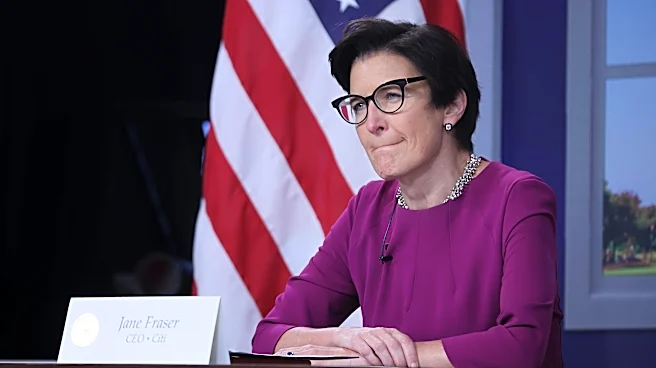
Jane Fraser continues to serve as Citigroup’s CEO as of November 28, 2026, with no official departure date established. Citigroup has implemented significant financial incentives to retain her leadership, including a one-time restricted-stock award of $25
million and an additional 1.055 million stock options. These incentives are structured to vest over several years, with the first portion becoming available in October 2028 and full vesting by October 2030. The company's 2026 proxy statement indicates that the board has no reason to believe Fraser intends to leave her position. Furthermore, in October 2025, Fraser was appointed Chair of the Board in addition to her CEO role, consolidating her authority within the organization. This dual role places her in charge of both implementing solutions for ongoing issues and overseeing the board's review of those efforts.
Why It's Important?
The continued tenure of Jane Fraser as Citigroup's CEO, bolstered by substantial financial incentives, signals the board's commitment to her leadership despite ongoing challenges. The significant stock awards and options are designed to align her long-term interests with the company's performance, aiming to provide stability during a period of transformation. However, her dual role as CEO and Chair of the Board raises governance questions regarding oversight and accountability. This structure means the individual responsible for addressing the bank's issues is also leading the body tasked with overseeing those very efforts, potentially creating a conflict of interest or reducing independent scrutiny. This could impact investor confidence and the effectiveness of internal reforms, particularly as the company navigates its unfinished transformation.
What's Next?
The financial milestones set for Jane Fraser's incentives, particularly October 2028 for initial vesting and October 2030 for full vesting, will be key dates to watch. While these are not explicit departure dates, they represent significant points in her compensation structure that could influence future decisions. The market and governance advocates will likely continue to scrutinize the effectiveness of her leadership, especially given her dual role as CEO and Chair. Any further executive shake-ups or financial missteps could intensify calls for greater accountability or a re-evaluation of the board's structure. Citigroup's ongoing transformation efforts under Fraser's leadership will remain a central focus for stakeholders, with progress or setbacks potentially influencing her long-term tenure.
Beyond the Headlines
The decision to grant Jane Fraser additional authority by making her Chair of the Board while she oversees Citigroup's transformation highlights a broader trend in corporate governance where CEOs also hold the chairman role. This practice, while not uncommon, often sparks debate about the balance of power and the independence of the board. Critics argue that combining these roles can diminish the board's ability to provide independent oversight, potentially leading to less rigorous accountability for the CEO. Conversely, proponents suggest it allows for more unified leadership and quicker decision-making. For Citigroup, this structure means Fraser is both the architect and the primary overseer of the bank's strategic direction and operational fixes, placing immense responsibility on her and potentially limiting the checks and balances typically provided by a separate board chair.