






What's Happening?
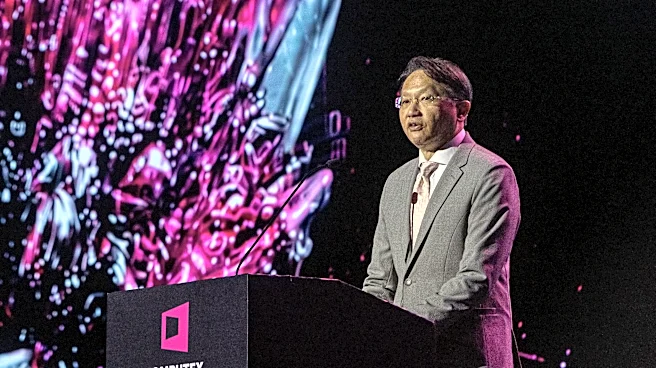
Joe Tsai, President and co-founder of Alibaba, has asserted that open source Artificial Intelligence (AI) is Europe's sole viable option for achieving true technological sovereignty. Speaking at the Wave event in Italy, Tsai argued that European companies
should invest in open models that can be custom-trained rather than relying on closed APIs provided by third parties. He emphasized that downloading open model weights, executing them on European infrastructure, and specializing them with internal company data through local fine-tuning would prevent sensitive information from being transmitted to external providers. This approach, according to Tsai, is crucial given that the United States and China control approximately 90% of global AI computing capacity, and major U.S. cloud providers dominate over 70% of the European cloud market. The recent instance of Washington blocking access to powerful Anthropic models highlighted the vulnerability of relying on distant APIs, reinforcing Tsai's argument for localized, open-source solutions.
Why It's Important?
Tsai's proposition carries significant weight for Europe's strategic autonomy in the rapidly evolving AI landscape. The current dominance of U.S. and Chinese entities in AI computing and cloud services presents a substantial dependency risk for European businesses and governments. By advocating for open-source AI, Tsai suggests a pathway for Europe to mitigate this reliance, ensuring data sovereignty and control over critical technological infrastructure. This could empower European companies to innovate and develop AI solutions tailored to their specific needs without fear of external interference or data exposure. The ability to audit code, adapt models to specific business requirements, and host them on sovereign cloud infrastructure would foster greater trust and security. However, the strategy also raises questions about merely shifting dependency from U.S. to Chinese-originated open models, as Chinese open-weight models are rapidly advancing and gaining significant adoption.
What's Next?
Europe is actively pursuing strategies to enhance its technological sovereignty, including the European Technological Sovereignty Package and plans for AI Gigafactories with investments exceeding 30 billion euros. The focus is on establishing AI data centers within Europe to host powerful models, both open and proprietary. For European companies, the pragmatic next step involves a hybrid approach: selecting a reference open-weight model (such as Qwen, Mistral, or Llama), hosting it on a European cloud or on-premise infrastructure, and specializing it with local data. Maintaining a multi-model and multi-cloud strategy will be crucial to avoid vendor lock-in. The success of this open-source AI strategy hinges on substantial accompanying investments in computing power, chip development, and the creation of truly European-designed AI models to prevent merely exchanging one form of dependency for another.
Beyond the Headlines
The push for open-source AI in Europe, as championed by Joe Tsai, extends beyond mere technological independence; it touches upon fundamental issues of digital sovereignty, economic competitiveness, and geopolitical influence. While open-source models offer technical control and data privacy advantages, the origin of these models remains a critical factor. If Europe primarily adopts open-source models developed in China, it risks substituting U.S. technological dependence with Chinese dependence, potentially exposing it to future geopolitical shifts or licensing changes. The ethical implications of AI development, including bias and accountability, could also be better addressed through transparent, auditable open-source models. Ultimately, Europe's ability to foster its own robust open-source AI ecosystem, supported by significant infrastructure investment and talent development, will determine its long-term success in navigating the complex global AI landscape and securing its digital future.