



What's Happening?
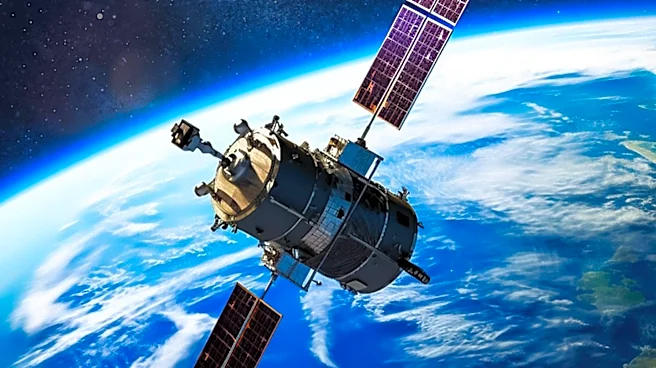
Amazon has filed a request with the Federal Communications Commission (FCC) to launch a new constellation of up to 5,105 low Earth orbit (LEO) satellites. This initiative, known as the Amazon Leo Direct-to-Device System, aims to provide direct communication
services to smartphones without additional hardware. The system will operate on spectrum acquired from Globalstar, a deal valued at over $11 billion, expected to close in 2027. This move mirrors similar strategies by competitors like SpaceX, which has also invested heavily in spectrum acquisition. Amazon plans to begin deploying these satellites in 2028, with each having a lifespan of six to eight years.
Why It's Important?
Amazon's entry into the direct-to-device (D2D) satellite market represents a significant expansion of its telecommunications capabilities, potentially reshaping the competitive landscape. By leveraging Globalstar's spectrum, Amazon aims to enhance connectivity options for consumers, particularly in areas with limited terrestrial infrastructure. This development could lead to increased competition in the satellite communication sector, driving innovation and potentially lowering costs for end-users. The substantial investment in spectrum acquisition underscores the high stakes involved in securing a foothold in the burgeoning D2D market.
What's Next?
Amazon's next steps involve securing regulatory approval and preparing for the satellite deployment scheduled to start in 2028. The company will need to navigate potential challenges related to launch capacity, as the broader Leo effort has been slowed by a shortage of available rockets. Amazon's strategy includes launching the D2D satellites in parallel with its existing broadband constellation, which faces its own deployment delays. The success of this initiative will depend on Amazon's ability to manage these logistical hurdles and effectively integrate the new system with its existing infrastructure.