






What's Happening?
The Shopify POS app is a mobile point-of-sale application designed to enable merchants to conduct sales in physical locations while maintaining a connection to their Shopify online store. This app allows businesses to process payments, manage products,
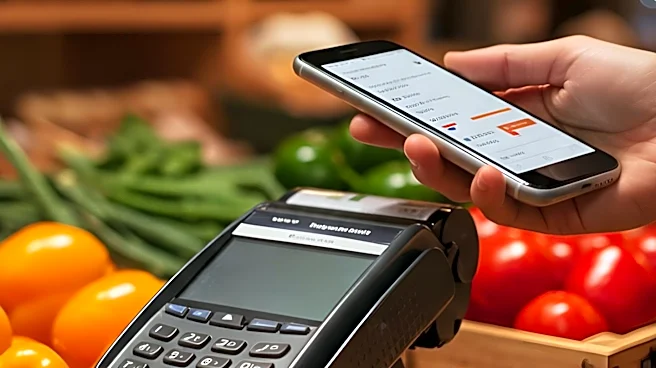
track inventory, access customer information, and handle in-store orders using supported mobile devices like smartphones and tablets. By integrating with Shopify's e-commerce platform, the POS app ensures that online and in-store operations share critical data, including product listings, inventory levels, customer details, and sales activities. This unified approach helps retailers achieve a consistent view of their business across various sales channels. The app is particularly beneficial for businesses operating retail stores, pop-up shops, and event-based selling environments that require mobile or flexible checkout solutions. It offers features such as real-time inventory management, customizable settings, and support for diverse payment methods, including credit cards, cash, and digital wallets.
Why It's Important?
The Shopify POS app is crucial for U.S. retailers seeking to bridge the gap between their online and physical sales channels. In an increasingly omnichannel retail landscape, the ability to seamlessly integrate in-person transactions with an existing e-commerce platform is vital for operational efficiency and customer satisfaction. This integration helps prevent inventory discrepancies, provides a comprehensive view of customer purchasing habits, and streamlines order management, whether sales originate online or in-store. For small to medium-sized businesses, the app offers an accessible entry point into sophisticated retail management, allowing them to scale their operations without significant upfront investment in complex systems. The flexibility to accept various payment methods also caters to diverse consumer preferences, enhancing the checkout experience and potentially increasing sales. Ultimately, by unifying sales data, businesses can make more informed decisions, optimize their inventory, and foster stronger customer relationships through a consistent brand experience.
What's Next?
Shopify continues to evolve its POS offerings with two distinct plans: Shopify POS Lite and Shopify POS Pro. Shopify POS Lite, included with all Shopify plans at no extra cost, provides essential features for basic in-person sales, inventory tracking, and customer profiles. Shopify POS Pro, available for an additional monthly fee per location, offers advanced functionalities such as unlimited store staff, smart inventory management, in-store analytics, staff management with unique roles, loyalty programs, and customizable hardware permissions. This tiered approach allows businesses to select a solution that aligns with their specific operational needs and growth trajectory. Future developments are likely to focus on further enhancing integration capabilities, expanding payment options, and incorporating more advanced analytics to provide deeper insights into customer behavior and sales performance across all channels. The platform's continuous innovation aims to support retailers in adapting to changing market demands and consumer expectations.
Beyond the Headlines
The widespread adoption of integrated POS solutions like Shopify's reflects a broader shift in retail towards a unified commerce strategy. This approach blurs the lines between online and offline shopping, enabling businesses to offer a cohesive customer journey regardless of the touchpoint. The emphasis on real-time data synchronization and comprehensive analytics highlights the growing importance of data-driven decision-making in retail. Furthermore, the availability of features like loyalty programs within the POS system underscores a strategic move towards enhancing customer retention and lifetime value. As consumers increasingly expect personalized and seamless experiences, tools that facilitate this, such as the Shopify POS app, become indispensable. The ethical implications revolve around data privacy and security, as more customer and transaction data is collected and shared across platforms. Businesses must ensure robust data protection measures are in place to maintain consumer trust in this integrated retail environment.