






What's Happening?
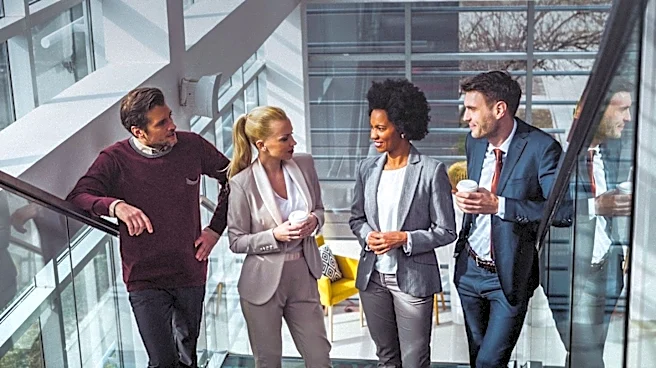
Corporate America is attempting to revive the traditional happy hour, a once-popular after-work ritual, as rising prices and changing work habits have made these gatherings less common. Companies are organizing elaborate events, such as barbecues and line
dancing, to foster employee connections. The traditional happy hour, known for its affordability and spontaneity, has been impacted by increased alcohol prices and the shift to hybrid work models. Employers are now creating new types of social events to replace the fading tradition, aiming to maintain employee engagement and camaraderie.
Why It's Important?
The decline of traditional happy hours reflects broader changes in workplace culture and social habits. As companies adapt to hybrid work models, they face challenges in maintaining employee morale and fostering team cohesion. The shift towards organized company events highlights the evolving nature of workplace socialization, where employers play a more active role in facilitating interactions. This trend could influence how businesses approach employee engagement and retention, as well as impact the hospitality industry, which traditionally benefited from after-work gatherings.
What's Next?
As companies continue to experiment with new social event formats, the success of these initiatives will likely influence future workplace culture strategies. Employers may increasingly invest in creative and diverse activities to attract and retain talent, especially in competitive industries. The evolution of workplace socialization could lead to new business opportunities for event planners and venues catering to corporate clients. Additionally, the hospitality industry may need to adapt to changing consumer preferences and explore new ways to attract after-work crowds.