





What's Happening?
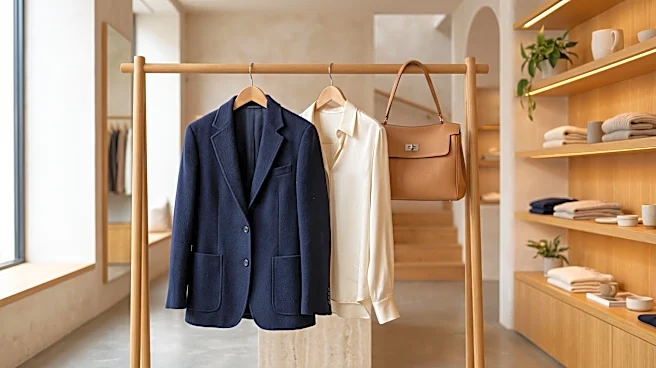
J. Crew has introduced a new consumer-facing, AI-enabled tool called Style Advisor, designed to replicate the personalized styling experience of in-store shopping online. This tool, which debuted on J. Crew's desktop website and will later be integrated
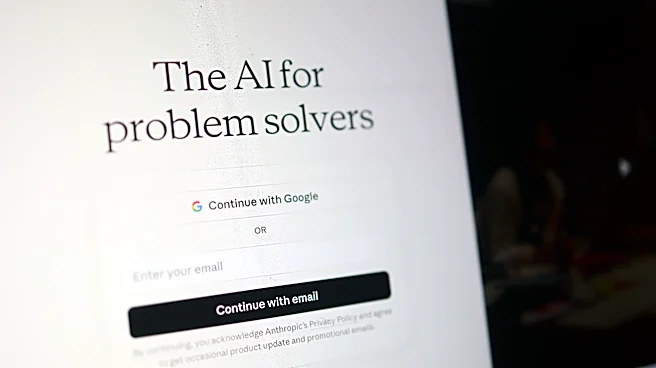
into its mobile app, is powered by Anthropic's Claude models. Specifically, it utilizes Fable 5.1 for complex judgment, Sonnet 5.5 and Haiku 4.5 for speed and efficiency, and Claude Opus 5.5 for prototype development. The Style Advisor is trained on extensive data from J. Crew's photo shoots and styling principles, including outfit and accessory pairings. It aims to provide recommendations beyond just individual items, considering contextual details like event type and location to offer nuanced styling advice. This initiative is part of a broader trend where retailers are adopting AI shopping assistants, though consumer adoption of retailer-specific AI tools currently lags behind general AI chat tools.
Why It's Important?
The launch of J. Crew's Style Advisor signifies a significant shift in the retail industry's approach to online customer engagement and personalization. By leveraging advanced AI, J. Crew aims to bridge the gap between the curated experience of physical stores and the convenience of e-commerce. This move could set a new standard for online fashion retail, potentially influencing other brands to invest further in AI-driven personalization. For consumers, it promises a more tailored and efficient shopping experience, reducing the guesswork involved in online purchases. For J. Crew, it represents an opportunity to enhance customer satisfaction, drive sales through more relevant recommendations, and potentially reduce returns. The success of such tools could also impact the role of human stylists in retail, shifting their focus towards training AI models and handling more complex customer interactions. The broader adoption of AI in retail also highlights the increasing importance of data privacy and ethical AI development, as these systems will rely on customer data to provide personalized services.
What's Next?
J. Crew plans to integrate the Style Advisor into its mobile app following its desktop debut, expanding accessibility for shoppers. Future enhancements will include incorporating a consumer's past purchase history to provide even more personalized recommendations, further mimicking the omnichannel shopping experience. Internally, J. Crew is fostering AI adoption through an AI fluency program and an internal AI lab called 'Second Thread,' which encourages all corporate employees to explore AI use cases. The company is also closely monitoring the costs and refining the AI models to ensure efficiency and scalability. The broader retail sector will likely observe J. Crew's success with this tool, potentially leading to increased investment in similar AI-powered styling and shopping assistants across the industry. The ongoing development of AI models by companies like Anthropic will continue to provide retailers with more sophisticated tools to enhance customer experiences.
Beyond the Headlines
The introduction of AI-powered styling tools like J. Crew's Style Advisor raises deeper questions about the evolving relationship between technology, fashion, and consumer identity. While offering convenience and personalization, these tools could subtly influence fashion trends and individual style choices by prioritizing certain aesthetics or product pairings. There's also an ethical dimension concerning the data used to train these AI models and how consumer preferences are interpreted and leveraged. The shift towards 'agentic shopping' suggests a future where AI plays a more proactive role in consumer decisions, potentially altering traditional shopping behaviors and brand loyalty. Furthermore, the internal cultural shift at J. Crew, encouraging employees to 'chart their own path on AI,' highlights a growing trend in corporate environments to democratize AI knowledge and foster innovation from within, rather than solely relying on top-down mandates. This could lead to more creative and integrated AI solutions across various business functions.