








What's Happening?
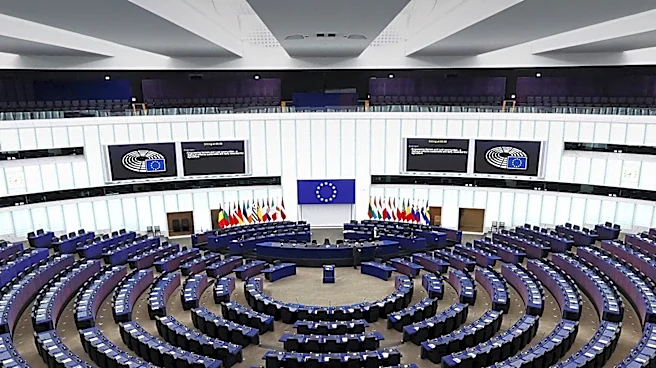
The European Commission has issued a preliminary finding that the e-commerce platform Temu has violated its obligations under the Digital Services Act (DSA). The Commission asserts that Temu has failed to implement adequate, proportionate, and effective
measures to mitigate the risk of illegal products being offered on its platform. This follows a previous finding in May where Temu was fined €200 million for not conducting an appropriate risk assessment. The current investigation highlights three key areas of inadequacy: ineffective controls for product compliance, a weak content moderation system, and an ineffective sanctions system. Specifically, Temu's product compliance checks are deemed insufficient, as the platform often does not verify test reports for products, even in high-risk categories like toys and electronics. Its content moderation system primarily focuses on listing information rather than product safety, and the number of human moderators has not kept pace with the platform's growth. Furthermore, Temu's sanctions system is criticized for targeting individual stores rather than the underlying traders, allowing repeat offenders to continue selling through other accounts.
Why It's Important?
This preliminary finding by the European Commission underscores a growing global concern regarding product safety and content moderation on large online marketplaces. While this specific action is in the EU, it sets a precedent for how major digital platforms are expected to operate and could influence regulatory approaches in other jurisdictions, including the U.S. The emphasis on proactive product safety checks, scalable moderation systems, and effective sanctions against traders rather than just storefronts reflects a broader regulatory push for greater platform accountability. For U.S. consumers, this could eventually lead to increased scrutiny of products sold on similar platforms operating within the U.S., potentially enhancing safety standards. For U.S. businesses operating online marketplaces, these findings serve as a warning to review and strengthen their own compliance, moderation, and sanctioning processes to avoid similar regulatory challenges and potential penalties.
What's Next?
Temu has the right to reply to these preliminary findings from the European Commission. Should the findings be confirmed, the platform could face significant penalties, including fines of up to 6% of its worldwide annual turnover, along with orders to implement corrective measures. This situation will likely prompt other online marketplaces, both in Europe and potentially in the U.S., to re-evaluate their own product compliance checks, content moderation strategies, and sanctioning systems. In the UK, consumer advocacy group Which? is urging the government to utilize new powers under the Product Regulation and Metrology Act 2025 to impose a clear legal duty on online marketplaces to ensure product safety, with robust enforcement mechanisms. This indicates a trend towards stricter regulation of online marketplaces globally, which could eventually impact U.S. policy discussions regarding e-commerce safety and accountability.
Beyond the Headlines
The European Commission's action against Temu highlights a fundamental tension between the rapid growth of e-commerce platforms and the imperative to ensure consumer safety and regulatory compliance. The critique of Temu's moderation system, which prioritizes listing information over actual product safety, points to a systemic issue where platforms may struggle to effectively police the vast array of products offered by third-party sellers. The inadequacy of sanctioning individual stores rather than the traders behind them reveals a loophole that allows bad actors to persist, raising ethical questions about platform responsibility in preventing harm. This development could accelerate the global movement towards more comprehensive digital governance, pushing for 'safety by design' principles where platforms are inherently built with robust protective measures. It also underscores the challenge of scaling human moderation alongside exponential platform growth, potentially driving innovation in AI-powered content moderation tools that are more attuned to product safety rather than just terms of service violations.