





What's Happening?
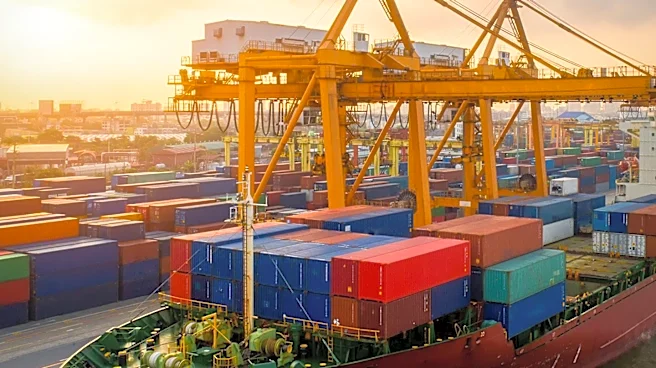
The United States has implemented 50% tariffs on approximately $20 billion worth of Canadian goods, effective just after midnight on Saturday. This action follows the collapse of trade negotiations between the two countries, with both sides attributing
the failure to the other. The tariffs target a range of Canadian imports, including items like wooden ice hockey sticks, wine, furniture, dairy products, cement, clothing, fishing rods, and hockey equipment. While the $20 billion figure represents just over 5% of Canada's exports to the U.S., the move signifies a significant escalation in trade tensions. Canadian Prime Minister Mark Carney announced the suspension of trade negotiations and stated that Canada would retaliate with its own 'dollar for dollar' tariffs. U.S. Trade Representative Jamieson Greer indicated that Canada declined to finalize a trade deal under previously agreed terms, calling it a 'missed opportunity.'
Why It's Important?
This imposition of tariffs by the U.S. on Canadian goods, and Canada's promise of retaliation, marks a significant deterioration in trade relations between two historically close allies. The tariffs, which do not qualify for preferential treatment under the US-Mexico-Canada free-trade agreement, are expected to impact already vulnerable sectors in Canada, potentially leading to job losses and business closures. For the U.S., while the immediate economic impact of these specific tariffs might be limited given the percentage of total Canadian exports affected, the broader implication is a heightened trade dispute with a major trading partner. This escalation could complicate future efforts to renew the US-Mexico-Canada free trade agreement and may lead to increased costs for consumers and businesses on both sides of the border as goods become more expensive due to the tariffs. The situation also highlights the challenges in international trade negotiations under the current U.S. administration.
What's Next?
Following the U.S. implementation of tariffs, Canada is expected to retaliate with its own 'dollar for dollar' tariffs on U.S. goods, as stated by Prime Minister Mark Carney. No additional trade talks are currently scheduled between the two nations, indicating a period of increased trade friction. The tariffs are likely to remain in effect, impacting various industries and potentially leading to higher prices for consumers. Businesses in both countries that rely on cross-border trade will need to adjust to the new tariff landscape, which could involve seeking alternative suppliers or markets. The ongoing dispute is also likely to make broader discussions regarding the renewal of the US-Mexico-Canada free trade agreement more challenging, potentially delaying or complicating its future. The situation could also prompt other countries to observe the U.S. approach to trade negotiations and its willingness to impose tariffs on allies.
Beyond the Headlines
The current trade dispute between the U.S. and Canada extends beyond immediate economic impacts, touching upon the reliability of international trade agreements and the stability of long-standing alliances. The U.S. decision to impose tariffs on a close neighbor, despite existing trade agreements, raises questions about the future of global trade relations and the potential for increased protectionism. This move could set a precedent for how the U.S. interacts with other trading partners, potentially leading to a more fragmented global trade environment. Ethically, the imposition of tariffs on goods like wooden ice hockey sticks, which are rarely used, highlights the symbolic nature of some of these measures, intended to exert pressure rather than achieve significant economic shifts. The breakdown of talks also underscores the political complexities involved in trade, where national interests and domestic political pressures can override established diplomatic norms and economic partnerships.