







What's Happening?
The Barbican Art Gallery is hosting 'Robert Ryman: The Real Thing,' an exhibition dedicated to the late American artist Robert Ryman, marking his first major UK show in over three decades. Ryman, born in Nashville, Tennessee in 1930, moved to New York
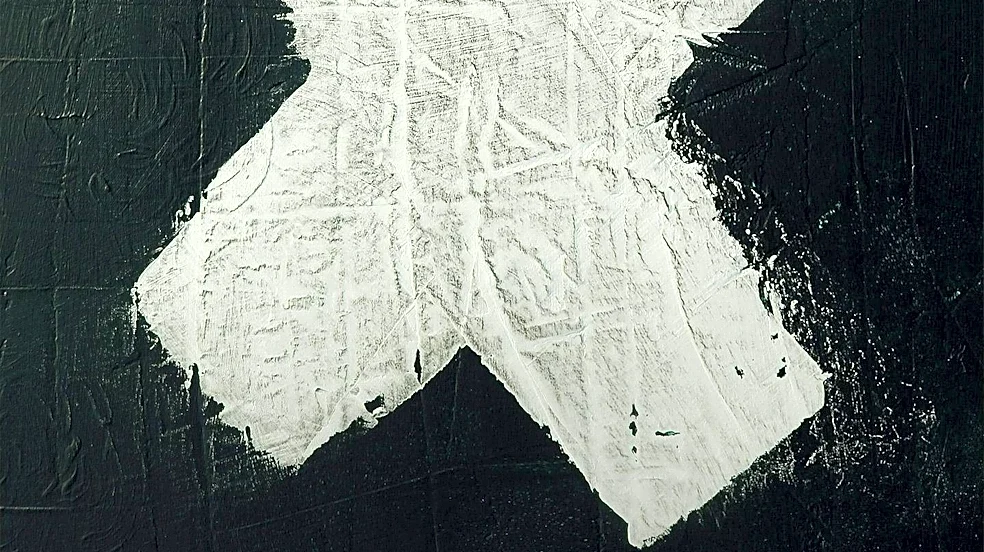
in the 1950s to pursue music but eventually taught himself to paint while working as a guard at the Museum of Modern Art (MoMA). His artistic practice diverged from traditional painting, focusing instead on the inherent conditions of the work itself, such as pigment, surface, scale, light, and space, rather than depicting images or narratives. The exhibition features works spanning from the mid-1950s to the early 2010s, aiming to introduce Ryman to a new generation of British audiences and challenge the common perception of his work as merely 'white paintings.' Curator Wells Fray-Smith emphasizes that Ryman is 'one of the most beloved painters of the 20th and 21st centuries.' Highlights include 'Untitled (Orange Painting)' (1955 and 1959), which Ryman considered his first 'professional' painting, and 'Surface Veil II' (around 1970), a 12ft by 12ft work that rarely travels. The exhibition also includes pieces on various materials like canvas, wallpaper, aluminum, Plexiglas, and copper, and works from a more experimental period in the 1960s that incorporate color.
Why It's Important?
This exhibition is significant for several reasons, particularly for the art world and public understanding of minimalist art. Robert Ryman's work, often characterized by its 'white paintings,' has frequently been misunderstood or oversimplified. By presenting a comprehensive collection spanning his career, the Barbican aims to reveal the profound complexity and intentionality behind his seemingly austere approach. This re-evaluation can shift critical discourse and public perception, highlighting Ryman's meticulous exploration of painting's fundamental elements. For American art history, it reinforces Ryman's status as a pivotal figure in Minimalism and Conceptual Art, demonstrating how his focus on material, process, and context influenced subsequent generations of artists. The exhibition's emphasis on direct experience, even removing wall texts in some sections, encourages viewers to engage more deeply with the art itself, fostering a more personal and less mediated appreciation. This approach challenges conventional museum practices and promotes a more active form of looking, which can be transformative for visitors.
What's Next?
The exhibition 'Robert Ryman: The Real Thing' will run at the Barbican Art Gallery in London until February 28, 2027. Following its run, the works will likely return to their respective collections and private owners. The impact of this exhibition will be measured by its ability to reshape critical and public understanding of Ryman's oeuvre, potentially leading to new scholarly interpretations and increased interest in his work globally. Art institutions and galleries may be inspired to re-examine their own collections of Ryman's art or similar minimalist works, potentially leading to future exhibitions or acquisitions. The curatorial decision to minimize interpretive texts could also influence future exhibition design, encouraging a more experiential approach to art viewing. The exhibition's success in challenging preconceived notions about Ryman's 'white paintings' could pave the way for similar re-evaluations of other artists whose work has been narrowly categorized.
Beyond the Headlines
Beyond the immediate artistic appreciation, Robert Ryman's work, as presented in this exhibition, delves into profound philosophical questions about perception, presence, and the essence of art itself. His focus on the 'conditions of the work'—pigment, surface, scale, light, and space—invites viewers to consider how these elements fundamentally shape our experience of an artwork, rather than merely its subject matter. This approach challenges the traditional narrative function of painting and instead emphasizes the act of seeing and the physical interaction between the viewer and the object. In a world saturated with images and information, Ryman's art, which demands slow, careful looking, offers a counter-narrative, encouraging a meditative engagement that can be deeply rewarding. It highlights the ethical dimension of art viewing, urging us to be present and attentive, and to trust our own responses rather than relying solely on external interpretations. This exhibition, therefore, is not just about Ryman's art but also about the art of looking and the value of direct, unmediated experience.