




What's Happening?
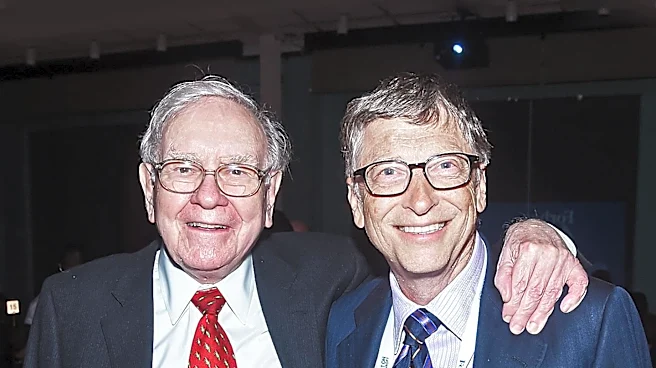
Warren Buffett, renowned for his investment acumen, has long endorsed passive index investing as a viable strategy for retail investors. In his 2013 shareholders letter, Buffett recommended that most investors should allocate their funds into a low-cost
S&P 500 index fund, specifically suggesting Vanguard's ETF due to its minimal fees and potential to outperform other investment instruments. This advice stems from Buffett's belief that passive index funds generally deliver better results than actively managed funds, which often underperform the market. Buffett's endorsement of passive investing is rooted in his own experiences and observations over decades, including a notable bet in 2007 where he wagered that the S&P 500 would outperform a selection of hedge funds over ten years—a bet he won in 2017.
Why It's Important?
Buffett's recommendation is significant as it underscores a shift towards passive investing among retail investors, who may not have the time or expertise to actively manage their portfolios. By advocating for low-cost index funds, Buffett highlights the importance of minimizing fees to maximize returns, a principle that can significantly impact long-term investment growth. This approach democratizes investing, making it accessible to a broader audience who can benefit from market growth without the need for extensive financial knowledge. The endorsement from a figure like Buffett lends credibility to passive investing, potentially influencing investment strategies across the U.S. and encouraging more individuals to participate in the stock market.
What's Next?
As passive investing continues to gain traction, it is likely that more retail investors will follow Buffett's advice, leading to increased inflows into index funds like the Vanguard S&P 500 ETF. This trend could further pressure actively managed funds to justify their higher fees and performance. Financial advisors and institutions may also need to adapt their offerings to cater to the growing demand for low-cost investment options. Additionally, as more investors embrace passive strategies, the overall market dynamics could shift, with implications for fund management and financial planning industries.