


What's Happening?
Bill Ackman, the 60-year-old CEO of Pershing Square Capital Management, has been deeply embedded in the world of tennis for two decades, providing significant financial support to players and organizations. His involvement reached a peak last year when
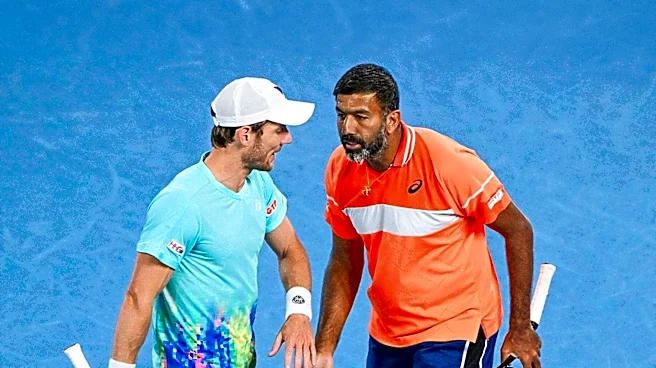
he played in a professional doubles match at the International Tennis Hall of Fame's Challenger Tour event. Ackman, partnered with former world No. 8 Jack Sock, received a wild card entry. The match, which they lost 6-1, 7-5 to journeymen Bernard Tomic and Omar Jasika, drew criticism and was described by Andy Roddick as 'the biggest joke I’ve ever watched.' Following the match, Ackman offered a $10 million endowment to the Hall of Fame, which was subsequently declined amid public criticism, leading him to donate the money to the Junior Tennis Champions Center (JTCC) instead.
Why It's Important?
Ackman's foray into professional play and subsequent philanthropic actions highlight the complex intersection of wealth, amateur ambition, and professional sports integrity. His financial contributions have significantly impacted the careers of players like Frances Tiafoe and Robin Montgomery, and supported initiatives like Novak Djokovic's players' union. However, his participation in a professional match raised questions about fairness and the potential for money to influence competitive opportunities. The Hall of Fame's decision to decline his endowment after the controversy underscores the sensitivity around perceived quid pro quo arrangements in sports. This event brings to light the ethical considerations when wealthy benefactors seek direct participation in the sports they support.
What's Next?
While Ackman's direct participation in professional tournaments may be curtailed due to the controversy, his financial influence in tennis is likely to continue. His ongoing support for player development through organizations like JTCC and his involvement in events like the Finance Cup suggest he will remain a significant figure behind the scenes. The tennis community will likely continue to grapple with how to balance the need for philanthropic support with maintaining the integrity and fairness of competition. Future wild card decisions in professional tournaments may face increased scrutiny, especially when involving non-professional players with significant financial ties to the sport.
Beyond the Headlines
Ackman's journey in tennis reveals deeper implications about the psychology of highly successful individuals and their pursuit of personal aspirations within professional domains. His belief in his own abilities, cultivated through years of playing with top talent, led him to test himself in a professional setting, despite the vast difference in skill levels. This phenomenon, often termed 'customer tennis,' where pros adjust their play to make amateurs feel competitive, can create a skewed perception of one's actual abilities. The incident also sparks a broader discussion about the role of money in sports—how it can foster talent and development, but also how its influence can blur lines between amateur and professional, potentially undermining the meritocratic principles of competition. It highlights the constant tension between commercial interests and the purity of sport.