



What's Happening?
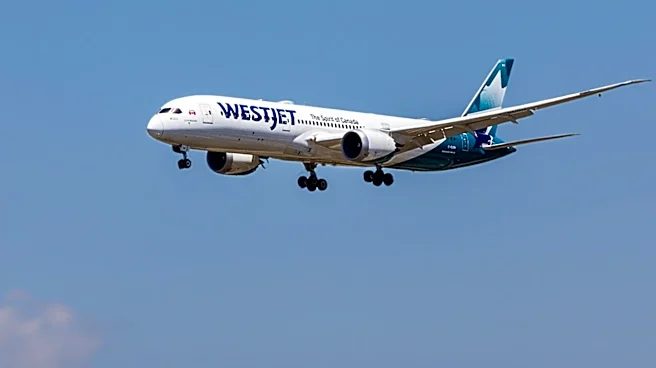
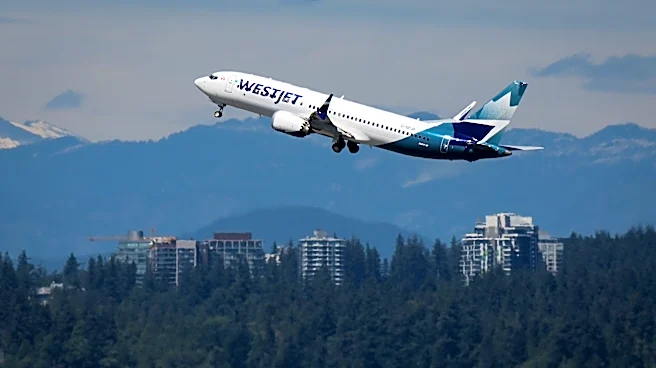
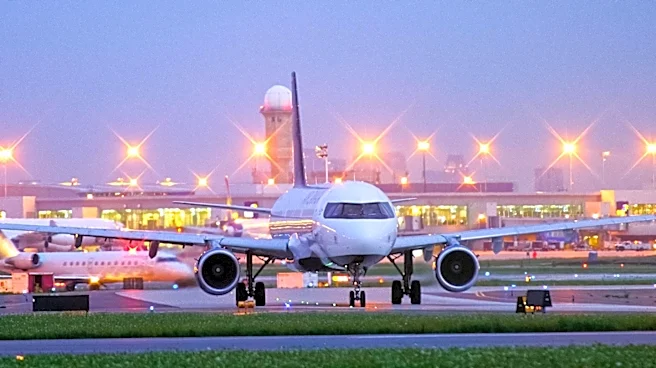
WestJet flight attendants have initiated a strike after negotiations with the airline failed to resolve disputes over wages and ground pay. The strike, which began on August 2, 2026, has led to the cancellation of over 300 flights during a busy summer
weekend. The Canadian Union of Public Employees (CUPE), representing 4,400 WestJet flight attendants, has been in talks with the airline for 10 months. The union argues that the current compensation system does not adequately compensate for work done before takeoff and after landing. WestJet proposed a new contract offering a 20.5% wage increase over four years and a 'duty pay premium' to address ground pay concerns, but the offer was rejected by the union.
Why It's Important?
The strike highlights ongoing tensions in the airline industry regarding compensation for flight attendants, particularly concerning ground pay. This issue has previously led to strikes, such as the one by Air Canada flight attendants last year. The disruption caused by the WestJet strike affects thousands of travelers and underscores the broader challenges airlines face in balancing operational costs with fair employee compensation. The outcome of this strike could set a precedent for future negotiations in the industry, potentially influencing labor relations and compensation structures across other airlines.
What's Next?
The Canadian government may intervene if the strike continues to disrupt travel significantly. In the past, the government has used Section 107 of the Canada Labour Code to mandate arbitration and end strikes. However, unions criticize this approach, arguing it undermines collective bargaining. The resolution of this strike will depend on whether WestJet and CUPE can reach a new agreement or if government intervention becomes necessary. The situation remains fluid, with potential implications for labor relations in the airline industry.