








What's Happening?
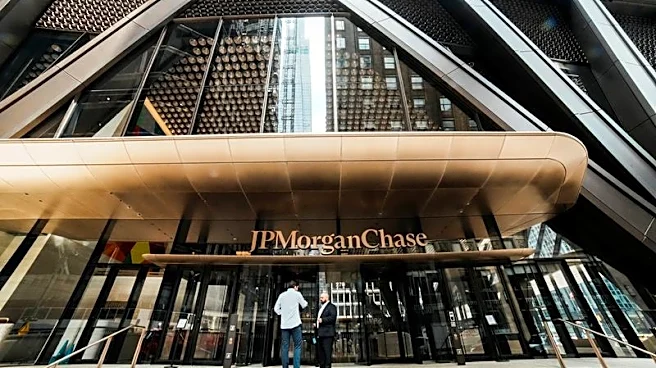
JPMorgan Chase has reported its financial results for the second quarter of 2026, revealing a significant earnings per share (EPS) of $7.70 on a reported basis and $6.14 excluding significant items, both figures surpassing the Wall Street consensus of $5.44.
The bank's net revenue reached $57.3 billion, exceeding the expected $48.8 billion. Key contributors to this performance included a $4.6 billion net gain on Visa shares and $1.0 billion from certain equity investments. Excluding these items, JPMorgan's net income rose to $16.9 billion, marking a 13% increase from the previous year. The bank's return on tangible common equity (ROTCE) was reported at 23%. Revenue records were set across all business lines, with the Commercial and Investment Bank leading the charge. Markets revenue increased by 35% year-on-year to $12.1 billion, and Investment Banking fees rose by 30% to $3.3 billion. Asset and Wealth Management (AWM) revenue grew by 19%, with assets under management (AUM) reaching $5.1 trillion.
Why It's Important?
JPMorgan's robust financial performance in Q2 2026 underscores the bank's strong position in the financial sector and its ability to capitalize on market opportunities. The significant revenue growth across all business lines highlights the bank's diversified business model and its capacity to adapt to changing market conditions. The increase in Investment Banking fees and AUM indicates a healthy demand for financial services and investment products. CEO Jamie Dimon's comments on the U.S. economy's resilience, supported by AI-driven capital investment and fiscal stimulus, suggest a positive outlook for the financial sector. However, Dimon also cautioned about potential risks such as geopolitical tensions, persistent inflation, and high asset prices, which could impact future performance.
What's Next?
JPMorgan's continued focus on share repurchases and dividend payments, with $6.2 billion returned to shareholders and a $1.50 per share common dividend paid in the quarter, reflects its commitment to delivering value to shareholders. The bank's strong capital position, with a CET1 capital ratio of 14.1%, provides a solid foundation for future growth and investment. As the bank navigates potential risks, including geopolitical tensions and inflation, its strategic investments in technology and efficient regulation may help mitigate these challenges. Stakeholders will be closely monitoring how JPMorgan leverages its strong financial position to drive further growth and maintain its competitive edge in the financial industry.