



What's Happening?
The Matthews Emerging Markets Equity Active ETF (MEM) has seen a substantial decline, falling approximately 11% over the past 30 days and roughly 22% over the trailing three months. This downturn, which began in late August, has pushed the fund near the lower
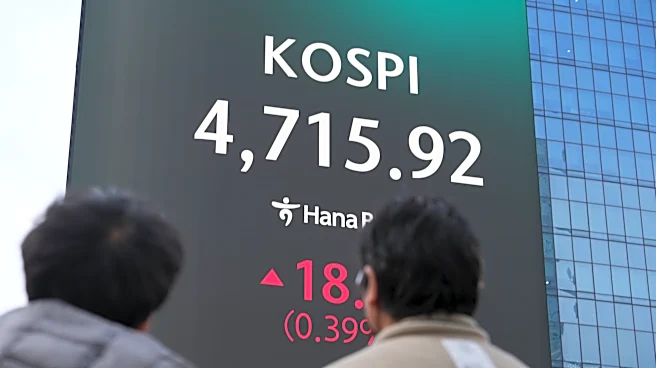
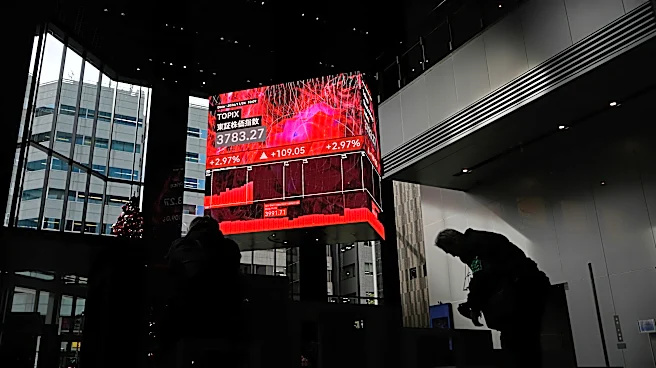
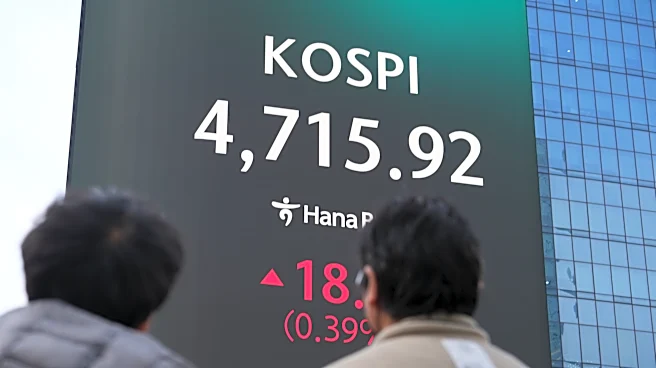
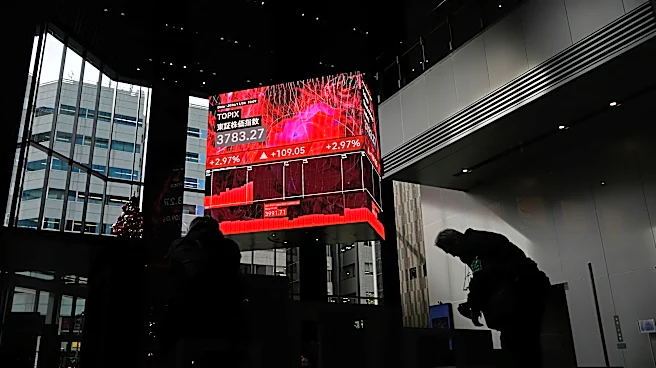
end of its 52-week range. The primary driver behind this performance is a sharp selloff in Asian semiconductor and AI-related shares, which constitute a significant portion of MEM's portfolio. Taiwan's benchmark equity index recorded its worst weekly decline since 1990, and South Korea's Kospi also tumbled as investors unwound crowded AI trades. Key holdings such as Taiwan Semiconductor (TSM), Samsung Electronics, and SK hynix have been major contributors to the decline. The selloff was exacerbated by new U.S. restrictions on advanced AI chip exports to China, raising concerns about supply-chain disruptions and softer demand in the Asian chip industry. Additionally, growing questions about the sustainability of AI infrastructure spending and elevated valuations in the sector contributed to broad de-risking.
Why It's Important?
The decline of the MEM ETF highlights the volatility and interconnectedness of global financial markets, particularly the impact of geopolitical actions and shifts in investor sentiment on specific sectors. The U.S. restrictions on AI chip exports to China directly affect the revenue and growth prospects of major Asian semiconductor companies, which are critical suppliers in the global technology ecosystem. This situation underscores the vulnerability of investment funds heavily concentrated in specific regions and sectors, such as MEM's significant allocation to North Asian technology and financial names. The unwinding of AI-driven trades suggests a re-evaluation of future AI infrastructure spending, potentially impacting the broader technology industry and related supply chains. For U.S. investors, this event serves as a reminder of the risks associated with emerging market investments and the influence of international trade policies on portfolio performance. The performance of these Asian chipmakers is crucial for the global technology supply chain, affecting everything from consumer electronics to advanced computing.
What's Next?
The future trajectory of the MEM ETF will largely depend on the evolution of AI capital spending and the health of the semiconductor memory cycle. Investors will need to closely monitor data-center project timelines and high-bandwidth memory (HBM) orders to assess whether earnings estimates for major holdings like TSMC, Samsung Electronics, and SK hynix can be supported, or if capacity expansion and pricing pressures will continue to weigh on margins. Macroeconomic conditions, including U.S. interest-rate policy and global risk appetite, will also play a significant role. Any further changes to export controls affecting China could introduce additional volatility. Currency movements in the Korean won and Taiwan dollar, along with foreign-investor positioning and potential stabilization measures from regional authorities, will influence near-term market dynamics. The fund's structural concentration in North Asian technology means its performance will remain closely tied to the outlook of that sector.
Beyond the Headlines
This event extends beyond immediate financial losses, touching upon deeper implications for global technological leadership and economic interdependence. The U.S. export restrictions on AI chips to China represent a strategic move to control critical technology, potentially reshaping the global semiconductor landscape. This could accelerate efforts by China to develop indigenous chip manufacturing capabilities, leading to a more fragmented and potentially less efficient global supply chain. For the U.S., such policies aim to maintain a technological edge but also risk retaliatory measures and disruptions to American companies reliant on global markets. The unwinding of 'crowded AI trades' also suggests a maturing phase in the AI investment cycle, where initial euphoria gives way to more rigorous scrutiny of valuations and sustainable growth. This shift could lead to a more discerning allocation of capital in the AI sector, favoring companies with robust fundamentals and clear pathways to profitability, rather than speculative growth.