









What's Happening?
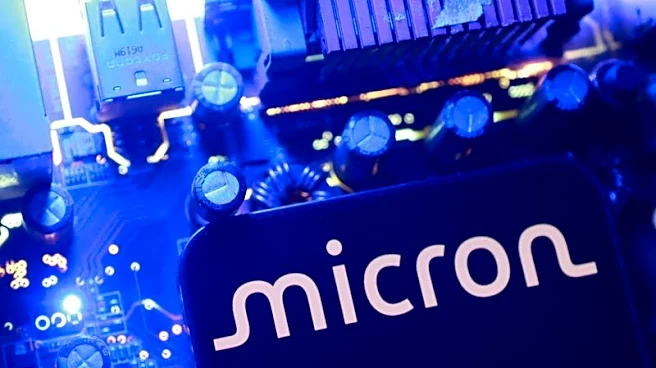
Micron Technology has unveiled a significant investment plan, committing over $250 billion to expand its domestic manufacturing capabilities in the United States by 2035. This plan marks a 25% increase from the $200 billion investment announced last year.
The funding will focus on constructing a second memory chip fabrication plant in Boise, Idaho, and expanding an existing facility in Manassas, Virginia. Additionally, tens of billions will be allocated for technology research and development. This move is part of Micron's strategy to produce 40% of its DRAM output domestically, responding to global supply chain restructuring and geopolitical uncertainties. The announcement comes amid a broader industry trend, with other international memory chip manufacturers also enhancing their domestic production capacities.
Why It's Important?
Micron's investment is a strategic response to the increasing demand for memory chips driven by AI computing needs and the ongoing geopolitical tensions affecting global supply chains. By localizing a significant portion of its production, Micron aims to mitigate risks associated with international trade disruptions and enhance its competitive edge in the U.S. market. This move is likely to bolster the U.S. semiconductor industry, potentially creating jobs and fostering technological advancements. It also reflects a broader industry shift towards domestic manufacturing, as companies seek to navigate complex global trade dynamics and ensure supply chain resilience.
What's Next?
Micron's investment is expected to stimulate further developments in the U.S. semiconductor sector, potentially prompting other companies to follow suit with similar domestic expansion plans. The focus on research and development could lead to technological innovations and advancements in memory chip production. Additionally, the increased domestic production capacity may influence global supply chain dynamics, potentially affecting pricing and availability of memory chips worldwide. Stakeholders, including policymakers and industry leaders, will likely monitor these developments closely, as they could have significant implications for the U.S. economy and its position in the global technology landscape.