



What's Happening?
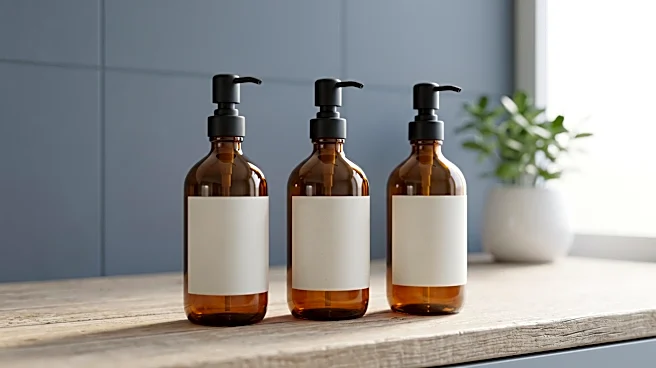
Miniml, a UK-based brand, is offering an eco-friendly, anti-bacterial bathroom cleaner with a refillable system. This product is formulated with plant-based ingredients, is bleach-free, and cruelty-free, while still effectively eliminating 99.9% of bacteria.
The company's commitment to sustainability is evident through its zero-waste system, which allows customers to order 5-liter refills and return the empty containers for reuse. This initiative aims to reduce plastic waste and promote more sustainable cleaning practices in households. The product is highlighted for its pleasant and natural cucumber and mint scent, making it an appealing option for environmentally conscious consumers, families, and pet owners seeking effective natural cleaning solutions for daily use.
Why It's Important?
The availability of products like Miniml's refillable cleaner in the UK market signifies a growing trend towards sustainable consumption and reduced environmental impact. For U.S. consumers and businesses, this trend indicates a potential shift in market demand and product development. As environmental awareness increases, U.S. companies may face pressure to adopt similar eco-friendly and zero-waste models to remain competitive. This could lead to innovations in packaging, supply chain logistics for refill systems, and the development of more plant-based cleaning solutions. The success of such models in the UK could serve as a blueprint for U.S. retailers and manufacturers looking to cater to a demographic increasingly prioritizing sustainability, potentially influencing U.S. policy on waste reduction and product labeling.
What's Next?
The success and expansion of brands like Miniml in the UK could pave the way for similar eco-friendly refillable product models to gain traction in the U.S. market. Consumers in the U.S. might see an increase in local refill stations and a wider variety of sustainable household products. Businesses, particularly those in the cleaning and personal care sectors, may begin to invest more in research and development for plant-based formulas and circular economy practices. This could also prompt discussions among U.S. policymakers regarding incentives for sustainable manufacturing and waste reduction initiatives, potentially leading to new regulations or support programs for companies adopting zero-waste systems. The long-term outlook suggests a continued shift towards more environmentally responsible consumer goods.
Beyond the Headlines
The rise of eco-home refillable products, exemplified by Miniml, reflects a broader cultural and ethical shift towards environmental responsibility. This movement challenges the traditional linear economy model of 'take, make, dispose' by promoting reuse and waste reduction. Beyond the immediate environmental benefits of less plastic waste and fewer harsh chemicals, it fosters a more conscious consumer base that values sustainability. This trend could influence urban planning, encouraging the development of local refill hubs and community-based circular economies. It also raises questions about corporate responsibility and the role of businesses in driving sustainable change, potentially leading to a re-evaluation of production and consumption patterns on a larger scale, impacting everything from product design to supply chain ethics.