






What's Happening?
Anu, a company specializing in modular indoor farms and consumable seed pod supplies, has been awarded a $500,000 Phase IIB Small Business Innovation Research (SBIR) grant from the National Science Foundation (NSF). This grant will be utilized to advance
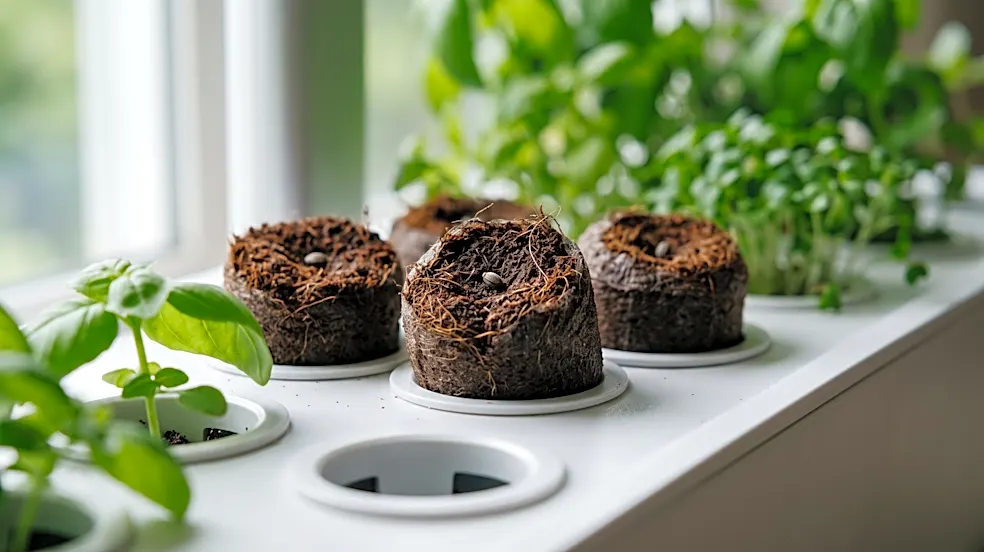
the multi-cavity tooling of Anu's patented, compostable Plug-and-Grow™ Seed Pods. These shelf-stable seed pods, preloaded with seeds and nutrients, are designed to be manufactured at Goodwill of Central & Southern Indiana. They are intended to simplify indoor farming by allowing users to plug them into a planting port, where they are water-activated by an automated growing system and grow without additional user input or horticultural knowledge. This grant follows previous NSF SBIR Phase I and II grants, totaling over $1.2 million, and additional funding from Elevate Ventures and Purdue Research Foundation.
Why It's Important?
This NSF SBIR grant is significant for advancing agricultural technology, particularly in the context of the 'Food is Medicine' movement. Anu's technology aims to make indoor farming more accessible and efficient, transforming agricultural inputs into a standardized, consumable product. This innovation can enable healthcare and nutrition professionals, such as dietitians, to oversee controlled-environment cultivation without needing specialized agricultural labor. The ability to produce millions of seed pods annually through automated manufacturing lines will facilitate the widespread deployment and expansion of 'Food is Medicine' programs across health ecosystems. Furthermore, the grant supports testing to quantify the nutritional quality of Anu-grown produce, with previous tests showing significantly higher nutrient density compared to store-bought equivalents. This focus on validated nutritional outcomes is crucial for healthcare providers seeking reliable, nutrient-rich food sources for clinical settings, potentially improving public health outcomes and addressing food insecurity.
What's Next?
The immediate next step for Anu is to utilize the $500,000 grant for the multi-cavity tooling of its compostable Plug-and-Grow™ Seed Pods. This will enable large-scale production of the seed pods at Goodwill of Central & Southern Indiana. Concurrently, the company will expand its testing efforts to quantify the nutritional quality of its produce, building on previous findings of enhanced nutrient density. The long-term goal is to scale Anu's 'Food is Medicine' platform, focusing on reliably producing and validating nutritional outcomes for healthcare providers. This involves making decentralized 'Food is Medicine' programs easier to deploy and replicate. The success of this project could lead to broader adoption of automated indoor farming solutions in healthcare infrastructure, potentially influencing public health policies and dietary recommendations. Continued research and development will likely focus on expanding the variety of seed types and further optimizing the growing system for diverse applications.
Beyond the Headlines
Anu's technology represents a deeper trend towards integrating food production directly into healthcare and community settings, blurring the lines between agriculture, technology, and medicine. The 'Food is Medicine' concept, supported by this grant, highlights a growing recognition of nutrition's critical role in preventative care and disease management. The compostable nature of the seed pods also addresses environmental concerns, promoting sustainable agricultural practices. Moreover, the partnership with Goodwill of Central & Southern Indiana for manufacturing not only provides economic opportunities but also demonstrates a model for social impact through technological innovation. This initiative could lead to a re-evaluation of food supply chains, emphasizing localized, nutrient-dense production, and potentially influencing how food is prescribed and utilized in clinical settings. The focus on simplifying cultivation also democratizes access to fresh produce, potentially empowering individuals and communities to take greater control over their nutritional well-being.