




What's Happening?
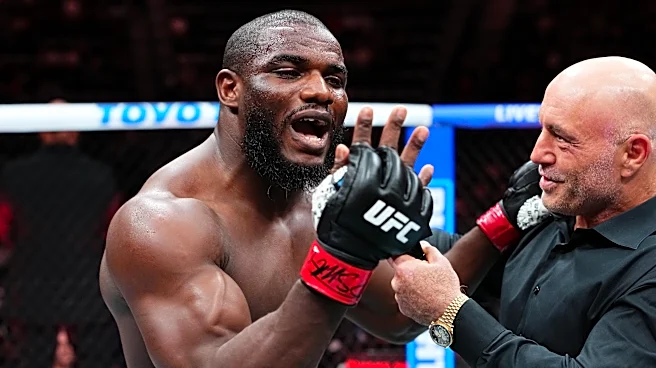
Joe Rogan, a prominent UFC commentator, has put forth a controversial claim that basketball can serve as an excellent foundational sport for heavyweight MMA fighters. Rogan articulated this view during a recent episode of 'The Joe Rogan Experience,' where
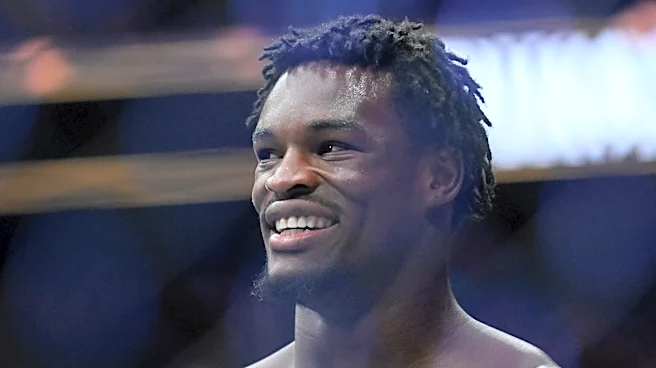
he specifically highlighted Ciryl Gane as an example. Rogan noted Gane's ability to move exceptionally well for a 250-pound fighter, attributing this agility to his background in basketball. He explained that basketball involves constant changes in direction, plyometric movements, and hand-eye coordination, all of which are crucial for striking and overall movement in MMA. Rogan believes that the footwork and dynamic motion developed in basketball are significant advantages for large athletes in the octagon. While Gane played basketball and soccer in his youth in France, he did not pursue either sport professionally. This take from Rogan follows other unconventional opinions he has shared regarding MMA, including a past suggestion that fights should occur on a basketball court to prevent fighters from using the cage to stand up.
Why It's Important?
Rogan's assertion, while potentially controversial, could influence how aspiring heavyweight MMA fighters and their coaches approach athletic development. If widely accepted, it might lead to a re-evaluation of traditional training bases for combat sports, encouraging a more diverse athletic background for fighters. The emphasis on sports like basketball and soccer, which develop agility, cardio, and coordination, could shift focus from purely strength-based training for heavyweights. This perspective challenges the conventional wisdom that often prioritizes wrestling or striking arts as primary foundations. For the UFC and MMA as a whole, a new generation of heavyweights with enhanced movement and athleticism could lead to more dynamic and exciting fights, potentially increasing fan engagement and the sport's appeal. It also opens a discussion about the multifaceted skills required in modern MMA beyond brute force.
What's Next?
It remains to be seen whether Rogan's argument will gain traction within the MMA community. Coaches and trainers might begin to incorporate elements of basketball-style training into their regimens for heavyweight prospects, or encourage young athletes interested in MMA to participate in sports like basketball. The discussion could also prompt further analysis from sports scientists and MMA analysts regarding the specific benefits of various athletic backgrounds for combat sports. Future heavyweight fighters with backgrounds in sports emphasizing agility and dynamic movement might be more closely scrutinized to see if Rogan's theory holds true. The ongoing debate about optimal training methodologies for MMA fighters, particularly in the heavyweight division, is likely to continue, with Rogan's comments adding a new dimension to the conversation.
Beyond the Headlines
Rogan's comments touch upon a broader theme in professional sports: the increasing specialization versus the benefits of diverse athletic development. In an era where athletes often specialize in one sport from a young age, Rogan's argument suggests that a broader athletic foundation, particularly one that develops transferable skills like agility and coordination, can be highly beneficial. This perspective could spark a re-evaluation of youth sports development models, encouraging multi-sport participation rather than early specialization. Ethically, it raises questions about the best approach to nurturing young talent for long-term success and injury prevention. Legally, there are no direct implications, but culturally, it could shift perceptions of what constitutes an 'ideal' athletic background for elite combat sports, moving towards a more holistic view of athleticism.