







What's Happening?
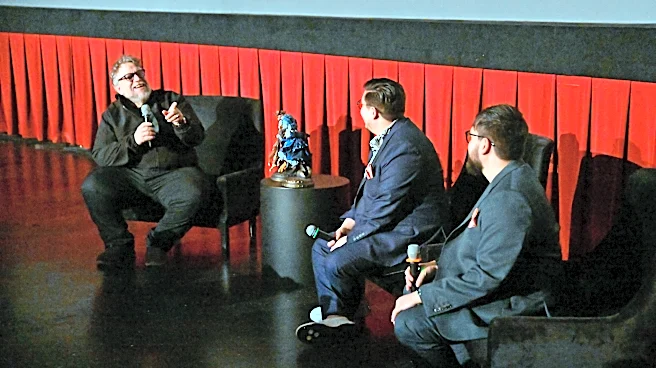
Filmmaker Guillermo del Toro has articulated his philosophy on how audiences engage with movies, particularly through repeat viewings. During a screening of his 2015 Gothic romance 'Crimson Peak' at Ebertfest on April 13, 2016, del Toro likened the experience
of watching a film multiple times to the progression of a relationship, culminating in marriage. He described the first viewing as a 'blind date,' the second as a 'proper date,' the third as 'flirtatious,' and the fourth as akin to being 'married' to the film. Del Toro emphasized that the initial viewing often focuses on the plot, while subsequent viewings allow audiences to appreciate the intricate details and artistic intentions behind each shot, which he considers a 'living painting.' He also reflected on the marketing of 'Crimson Peak,' noting that it was incorrectly sold as a horror movie when he intended for its romance and mystery elements to be highlighted.
Why It's Important?
Guillermo del Toro's perspective offers significant insight into the art of filmmaking and film appreciation, particularly for audiences and critics in the U.S. His explanation underscores the depth and layered storytelling present in his works, encouraging a more engaged and analytical approach to cinema. For the film industry, this highlights the potential disconnect between a filmmaker's artistic vision and how a movie is marketed, which can impact audience reception and box office performance. Del Toro's comments suggest that a film's true essence might only be fully grasped after multiple engagements, challenging the prevalent single-viewing consumption model. This perspective could influence how film education and criticism approach the analysis of complex cinematic narratives, promoting a deeper understanding of directorial intent and visual storytelling.
What's Next?
While del Toro's comments were made in 2016, their enduring relevance suggests continued discussion within film communities regarding audience engagement and the marketing of films. Filmmakers and studios might consider these insights when developing promotional strategies, aiming to align marketing more closely with the artistic intent of the creators. For audiences, this philosophy could encourage a more deliberate and repeated viewing of films, fostering a deeper appreciation for cinematic artistry. Film festivals and academic institutions may also use del Toro's framework to guide discussions and analyses of films, emphasizing the value of multiple viewings to uncover hidden layers of meaning and visual detail. The ongoing conversation about how films are presented and consumed will likely continue to evolve, influenced by such prominent directorial perspectives.
Beyond the Headlines
Del Toro's analogy extends beyond mere film consumption, touching upon broader themes of commitment, understanding, and the evolving nature of perception. By comparing repeat viewings to the stages of a relationship, he elevates the act of watching a film from passive entertainment to an active, evolving engagement. This perspective implicitly critiques the fast-paced, often superficial consumption of media in contemporary society, advocating for a more patient and immersive experience. Ethically, it raises questions about the responsibility of marketers to accurately represent a film's genre and tone, ensuring that audience expectations align with the artistic product. Culturally, it reinforces the idea that art, like relationships, deepens with repeated interaction, revealing new facets and meanings over time, thereby enriching the viewer's experience and fostering a more profound connection with the work.