









What's Happening?
Poppi, a brand known for its prebiotic sodas, is permanently expanding its product line with four new flavors. These additions are divided between Poppi’s 'lift' and 'chill' sublines. The 'lift' line, which includes 70mg of caffeine and Vitamin B3, will
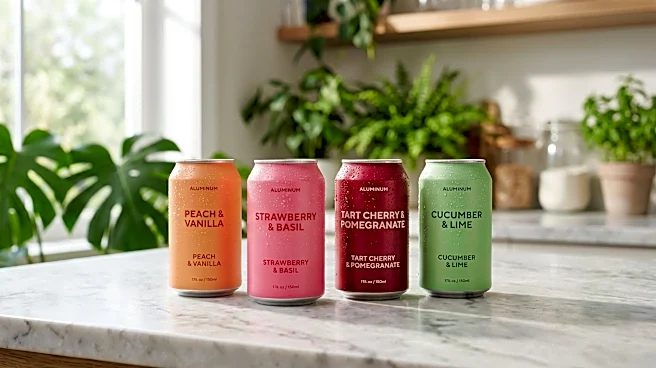
introduce Peach Ring and Strawberry Lollipop flavors. The 'chill' line, formulated with magnesium and L-theanine, will add Tart Cherry Pomegranate and Cucumber Lime. These new flavors are set to be released in January of next year, offering consumers more permanent options for gut-health focused beverages.
Why It's Important?
This expansion by Poppi reflects a significant trend in the U.S. beverage market towards functional drinks that offer specific health benefits, such as gut health and energy or relaxation. By introducing permanent new flavors, Poppi aims to capture a larger share of this growing market segment, appealing to consumers seeking alternatives to traditional sodas. This move could intensify competition among functional beverage brands, driving further innovation in flavor profiles and ingredient combinations. For consumers, it means a wider variety of choices that align with their wellness goals, potentially influencing purchasing habits and contributing to the mainstream acceptance of health-conscious beverages.
What's Next?
The release of these new flavors in January will be a key moment for Poppi, as their success will indicate consumer demand for diverse functional beverage options. Competitors in the prebiotic soda and functional drink categories will likely monitor Poppi's performance, potentially leading to similar product expansions or new market entries. The beverage industry as a whole is expected to continue its shift towards health and wellness, with ongoing research and development into ingredients that offer tangible benefits. This could lead to more sophisticated formulations and a greater emphasis on scientific backing for product claims.
Beyond the Headlines
The increasing popularity of brands like Poppi highlights a broader cultural shift towards proactive health management through diet. Consumers are becoming more educated about ingredients and their potential effects on the body, particularly concerning gut health. This trend challenges traditional beverage manufacturers to adapt or risk losing market share. It also raises questions about the long-term impact of these functional ingredients on public health and the need for clear, evidence-based communication from brands. The blend of taste, convenience, and perceived health benefits is becoming a powerful driver in the modern food and beverage landscape.