








What's Happening?
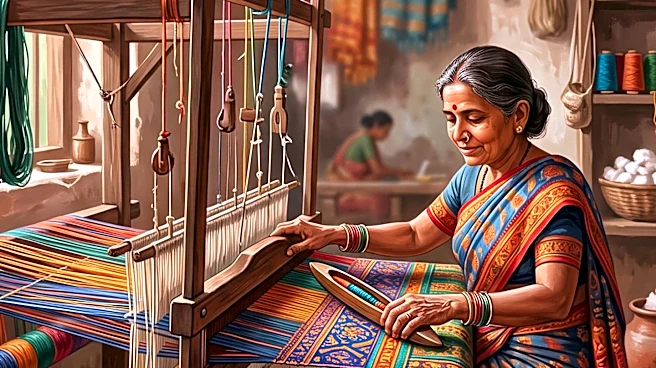
The traditional art of pashmina making in Indian-controlled Kashmir is experiencing a decline, marked by a shrinking workforce and a flourishing trade in counterfeit products. Artisans like Abdul Rehman meticulously thread individual strands for the warp,
a process requiring precision to avoid flaws in the final cloth. Zareefa Akther, a 41-year-old spinner, demonstrates the intricate process of dehairing raw pashm and spinning it into gossamer yarn using a traditional spinning wheel. The pashmina, derived from the fine undercoat of Himalayan Capra hircus goats, is renowned for its fineness, softness, and warmth. While a single pashmina stole can take three to four days to weave, complex Jamawar embroidered shawls can take months, and Kani weave shawls, which use hundreds of small bobbins, can take 12 to 18 months. The number of women involved in pashmina spinning has drastically reduced from an estimated 200,000 in the 1990s to approximately 21,000 currently, according to Riyaz Ahmad Kawoosa, publicity and exhibition officer at the region's handicraft and handloom department. In 2025-26, Indian-controlled Kashmir exported shawls worth 63.76 million U.S. dollars.
Why It's Important?
The decline in pashmina artisans and the prevalence of counterfeit products pose a significant threat to a centuries-old craft and the livelihoods it supports. The unique qualities of hand-spun Kashmiri pashmina, including its natural loft, lightness, softness, and warmth, are a result of traditional techniques and the specific fiber from Himalayan Capra hircus goats. The erosion of this craft not only means a loss of cultural heritage but also impacts the economic stability of thousands of Kashmiri women who rely on spinning for income. The global demand for luxury pashmina has inadvertently fueled the counterfeit market, making it difficult for consumers to distinguish authentic products. This situation highlights the challenges faced by traditional industries in maintaining their integrity and economic viability against mass-produced imitations and a dwindling skilled workforce.
What's Next?
To combat the issue of counterfeits, the local government in Indian-controlled Kashmir initiated Geographical Indication (GI) tagging for pashmina products in 2013. This certification process involves laboratory testing at the Craft Development Institute in Srinagar to verify the thickness, quality, and material of every hand-spun and hand-woven product. This measure aims to protect the authenticity of Kashmiri pashmina and ensure fair trade practices. Continued efforts in promoting GI tagging and educating consumers about authentic pashmina are crucial. Additionally, initiatives to attract and train new artisans are necessary to revitalize the declining workforce and preserve the traditional skills required for this intricate craft. The success of these measures will determine the future of this valuable cultural and economic asset.
Beyond the Headlines
The struggle of the pashmina industry in Indian-controlled Kashmir reflects a broader global challenge faced by traditional crafts in the age of mass production and globalization. The ethical implications extend to fair compensation for artisans, the preservation of indigenous knowledge, and the environmental impact of sourcing raw materials. The GI tagging, while a step towards authenticity, also raises questions about intellectual property rights for traditional crafts and the balance between protecting heritage and fostering innovation. The decline in artisans could lead to a loss of unique cultural identity and a shift in the socio-economic fabric of the region. The story of pashmina is not just about a luxury textile; it's about the resilience of a community, the value of human skill, and the ongoing battle to preserve cultural heritage against modern economic pressures.