




What's Happening?
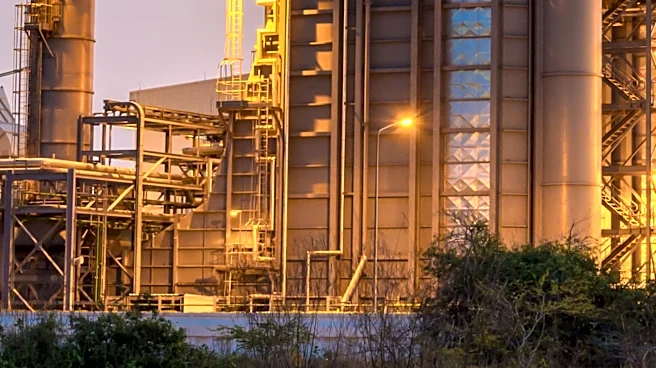
CF Industries Holdings, Inc., in a joint venture with JERA Co. and Mitsui & Co., has commenced construction on the Blue Point One low-carbon ammonia plant in Modeste, Louisiana. This facility, projected to be the world's largest upon completion, represents
a significant investment of $3.7 billion. CF Industries holds a 40% ownership stake, JERA 35%, and Mitsui 25%. The plant is designed to produce 1.4 million metric tons of ammonia annually and is expected to begin operations in 2029. A key feature of the project is its commitment to environmental sustainability, utilizing autothermal reforming (ATR) production technology to capture and permanently sequester approximately 98% of the carbon dioxide generated during production. This will result in one of the lowest environmental footprints for a large-scale ammonia facility globally. Additionally, CF Industries is investing an extra $550 million over four years in shared infrastructure to support future ammonia production and fertilizer upgrades. Linde plc is also contributing over $400 million for an on-site air-separation unit, and a joint venture between 1PointFive and Enbridge will manage the transportation and sequestration of captured CO2.
Why It's Important?
This groundbreaking project is crucial for several reasons, impacting both the U.S. economy and its role in global energy transition. The Blue Point One plant will create over 100 high-paying manufacturing jobs and an estimated 3,900 construction jobs over four years in Louisiana, providing a substantial boost to the local economy. From a national perspective, the facility will enhance the domestic supply of nitrogen, vital for American farmers, thereby strengthening food security and reducing reliance on foreign sources. Furthermore, the plant's capacity to export American-made low-carbon ammonia positions the U.S. as a leader in the emerging clean energy market. This initiative aligns with global efforts to decarbonize industrial processes and energy production, offering a lower-carbon alternative for traditional agricultural customers and new energy applications. The investment by international partners like JERA and Mitsui also underscores the growing global demand for sustainable industrial solutions and strengthens international collaborations in clean energy development.
What's Next?
The Blue Point One plant is slated to become operational in 2029. Leading up to this, the focus will be on the construction phase, which is expected to generate thousands of jobs. Once operational, the plant will significantly contribute to the supply of low-carbon ammonia, serving both agricultural and energy sectors. The successful implementation of its carbon capture and sequestration technology will be closely watched as a model for future industrial projects aiming to reduce their environmental impact. The additional investment by CF Industries in scalable infrastructure suggests potential for further expansion and upgrades in ammonia production and fertilizer capabilities at the site. The project's progress will likely influence future investment decisions in low-carbon industrial technologies within the U.S. and globally, potentially spurring more partnerships and technological advancements in the sector.
Beyond the Headlines
The Blue Point One project signifies a broader shift towards sustainable industrial practices and the integration of environmental considerations into large-scale manufacturing. By capturing 98% of CO2 emissions, the plant sets a new benchmark for environmental responsibility in the ammonia production industry. This initiative highlights the increasing importance of low-carbon solutions in addressing climate change and meeting evolving consumer and regulatory demands for greener products. The collaboration between U.S. and international companies also reflects a global commitment to developing and deploying advanced technologies for decarbonization. This project could serve as a blueprint for other energy-intensive industries seeking to reduce their carbon footprint, demonstrating the economic viability and environmental benefits of such investments. It also underscores the strategic importance of Louisiana as a hub for industrial innovation and energy production, adapting to the demands of a changing global energy landscape.