


What's Happening?
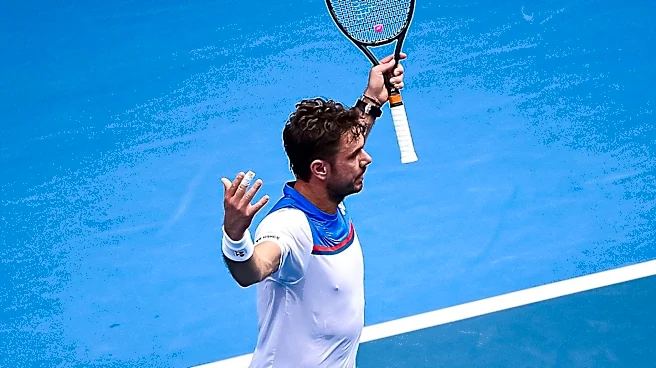
Stan Wawrinka has officially retired from professional tennis at the age of 41, concluding a career marked by perseverance and significant achievements. Wawrinka, known for his powerful backhand and mental fortitude, reached a career-high ranking of world
No. 3. He secured three Grand Slam titles, notably winning the 2014 Australian Open, 2015 French Open, and 2016 US Open. His career statistics highlight his ability to perform against top-ranked players, including a 5-4 record against world number ones in Grand Slams, placing him second only to Rafael Nadal in this regard. Wawrinka is also one of only two men, alongside Mats Wilander, to win two Grand Slams by defeating both the world number one and number two players in the same tournament. His longevity in the sport is underscored by his status as the second oldest player to defeat an ATP top-10 opponent, achieving this feat at 39 years and 200 days against Andrey Rublev in Stockholm in 2024. Despite never reaching the world number one ranking, Wawrinka holds the record for the most Grand Slam victories (160) without having occupied the top spot.
Why It's Important?
Wawrinka's retirement marks the end of an era for one of tennis's most compelling figures, particularly in the context of the 'Big Three' dominance. His ability to break through and win multiple Grand Slams during a period when Roger Federer, Rafael Nadal, and Novak Djokovic largely monopolized major titles underscores his exceptional talent and resilience. His career serves as an inspiration for athletes who may not be immediate prodigies but achieve greatness through sustained effort and strategic development. For the sport of tennis, Wawrinka's departure signifies the gradual transition of a generation of players who defined the modern era. His unique playing style, characterized by a powerful and aesthetically pleasing one-handed backhand, has left a lasting impression on fans and aspiring players. His success also highlights the importance of mental toughness and physical conditioning, as evidenced by his ability to compete at a high level into his late thirties, overcoming injuries and maintaining a rigorous training regimen.
What's Next?
Following his retirement, the tennis world will likely reflect on Wawrinka's legacy and his place among the sport's greats. Tributes from fellow players, coaches, and fans are expected to acknowledge his contributions to tennis. While Wawrinka's competitive playing days are over, he may transition into other roles within the sport, such as coaching, commentary, or ambassadorial duties, leveraging his vast experience and popularity. His retirement also opens up a spot in the competitive landscape, potentially allowing younger players to rise and fill the void left by his departure. The focus will now shift to the next generation of players and how they will shape the future of men's tennis, as more veterans from Wawrinka's era approach the end of their careers. The impact of his absence will be felt in future tournaments, particularly in Grand Slams where he consistently posed a threat.
Beyond the Headlines
Wawrinka's career transcends mere statistics, offering deeper insights into the psychological and physical demands of elite professional sports. His journey from a talented but inconsistent player to a multiple Grand Slam champion illustrates the profound impact of self-belief and strategic coaching, particularly his collaboration with Magnus Norman. His ability to peak in major tournaments, often against the sport's titans, speaks to a unique competitive spirit and a capacity to elevate his game under pressure. Furthermore, his longevity, despite significant knee surgeries, highlights advancements in sports medicine and rehabilitation, allowing athletes to extend their careers beyond previously expected limits. Wawrinka's story is a testament to the idea that success in sports is not solely about innate talent but also about relentless dedication, adaptability, and the courage to challenge established hierarchies. His influence will likely continue to inspire athletes to pursue their goals with unwavering determination, regardless of the formidable competition they face.