




What's Happening?
TJ Maxx has announced the closure of at least three U.S. store locations in 2026, including a prominent three-story store at 360 Newbury Street in Boston, Massachusetts, and two stores in Maryland (Silver Spring and Cumberland). The Boston location, which
had operated for nearly a decade, affected 117 workers, though employees were offered transfer opportunities. These closures are part of TJX's regular review of its real estate strategy. Despite these specific closures, TJX, the parent company of TJ Maxx, Marshalls, Homegoods, and others, is actively expanding its global network. The company currently operates over 5,200 stores worldwide and plans substantial long-term growth, indicating that the U.S. closures are selective portfolio adjustments rather than a broader pullback.
Why It's Important?
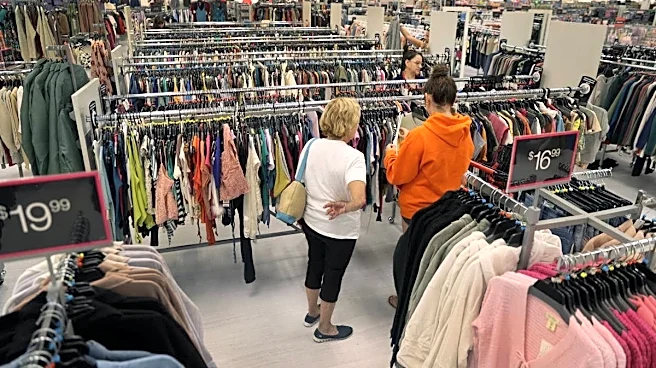
These selective store closures by TJ Maxx, a major off-price retailer, highlight a strategic shift within the retail sector. While individual communities lose a retail option, the broader context reveals TJX's focus on optimizing its store portfolio for global expansion and profitability. This strategy, which includes selective closures, smaller formats, and faster openings in high-demand areas, allows the company to adapt to changing consumer behaviors and market conditions. The off-price model, where merchandise is priced 20% to 60% below full-price retailers, remains particularly attractive to consumers, especially during periods when households are more cautious with discretionary spending. This approach helps TJX maintain its competitive edge and market leadership in the off-price segment, influencing how other retailers might adapt their physical footprints.
What's Next?
TJX is expected to continue its strategy of selective store portfolio adjustments, balancing closures with new store openings globally. This means that while some communities may see further TJ Maxx closures, others will likely experience new store developments or format changes. The company's focus on the off-price model suggests continued resilience in varying economic conditions, as consumers prioritize value. Stakeholders, including employees and local communities, will need to monitor TJX's real estate decisions, as closures can impact local employment and shopping accessibility. The broader retail industry will likely observe TJX's success in this adaptive strategy, potentially influencing similar portfolio optimizations among other large retailers.
Beyond the Headlines
The closures by TJ Maxx, while seemingly minor in the context of its global expansion, underscore a significant trend in retail: the continuous re-evaluation of physical store footprints in response to evolving consumer habits and operational efficiencies. This dynamic reflects a broader shift where brick-and-mortar locations are increasingly viewed as strategic assets that must justify their existence through profitability and market relevance. The off-price model's enduring popularity also highlights a societal value placed on affordability, which can intensify during economic uncertainties. This ongoing adaptation by major retailers like TJX has implications for urban planning, local economies, and the future of retail employment, as companies seek to optimize their presence in a competitive and rapidly changing market landscape.