
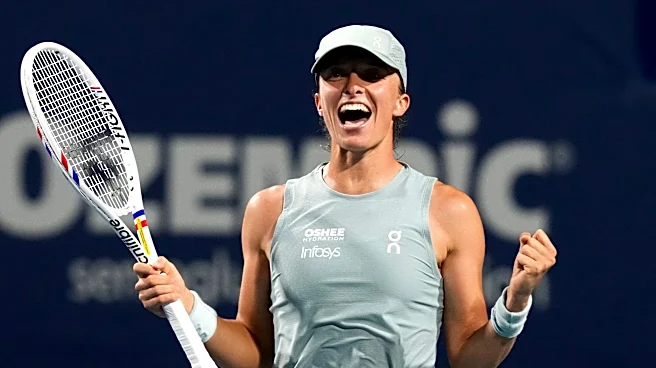

What's Happening?
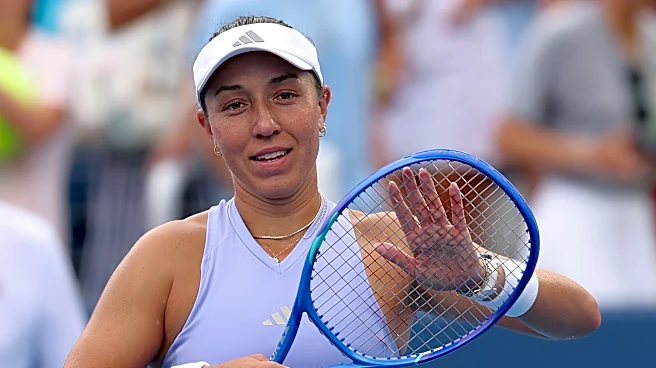
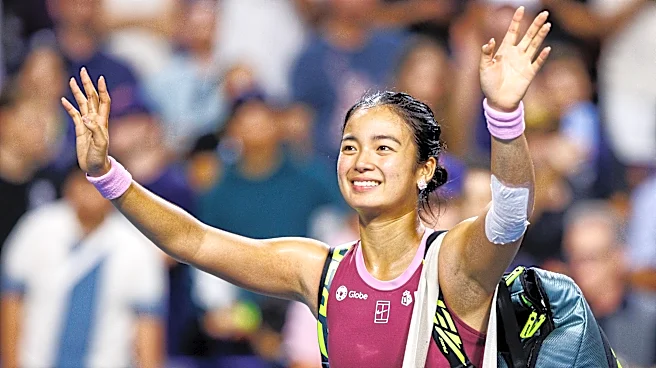
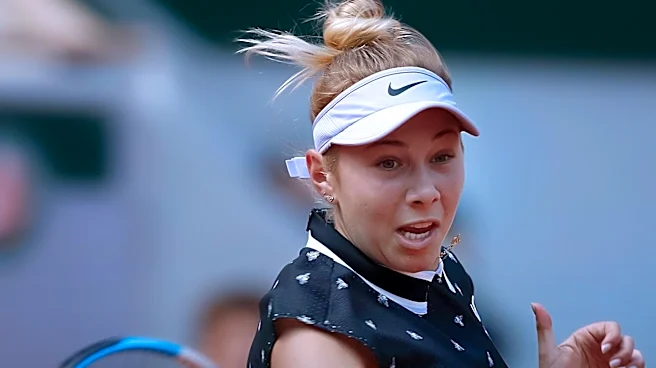
During a match at the Cincinnati Open in Ohio, American tennis player Amanda Anisimova was observed drinking an amber-colored liquid from a plastic cup. This led to speculation among Tennis Channel commentators, who questioned whether she was consuming
beer mid-match. One commentator remarked, "I would never suggest a player was drinking a beer in the middle of a match, but… that’s certainly what it looked like." Despite losing the first set to Alexandra Eala, Anisimova went on to win the match. The confusion was later resolved when television cameras showed an empty Red Bull can beside Anisimova's seating area, confirming the beverage was a caffeinated drink. Anisimova, 24, will proceed to face Linda Noskova in the last-16 round.
Why It's Important?
This incident highlights the intense scrutiny and public interest surrounding professional athletes, even concerning seemingly minor details like their choice of beverage during a match. The rapid spread of speculation, fueled by live commentary and social media, underscores the immediate impact of broadcast observations in sports. For athletes, maintaining a professional image and adhering to strict performance standards is crucial, and any perceived deviation can quickly become a talking point. The clarification that the drink was Red Bull, a common energy booster in sports, rather than alcohol, is important for Anisimova's public perception and professional standing. It also serves as a reminder of how easily misinterpretations can arise in high-pressure, live sporting events, affecting both the athlete and the narrative surrounding the competition.
What's Next?
Amanda Anisimova is scheduled to compete against Linda Noskova in the last-16 of the Cincinnati Open. Her performance in this upcoming match will be the immediate focus, as she aims to advance further in the tournament. The incident regarding her mid-match drink is likely to fade as the competition progresses, especially if she continues to perform well. For sports broadcasters and commentators, this event might lead to increased caution in speculating about on-court activities without full confirmation. The broader tennis community will continue to monitor player health and performance, with an emphasis on legitimate competitive factors rather than anecdotal observations.
Beyond the Headlines
The brief controversy surrounding Amanda Anisimova's drink touches upon the broader themes of media interpretation, public perception, and the pressures faced by professional athletes. In an era of constant media coverage and instant social media reactions, every action of a public figure can be scrutinized and potentially misconstrued. This incident, while minor, illustrates how quickly a narrative can form based on visual cues, even if incorrect. It also subtly highlights the role of performance-enhancing (though legal) substances like energy drinks in professional sports, where athletes constantly seek an edge. The quick resolution, with visual evidence clarifying the situation, demonstrates the importance of factual verification in media reporting, especially in live events where initial impressions can be misleading.