






What's Happening?
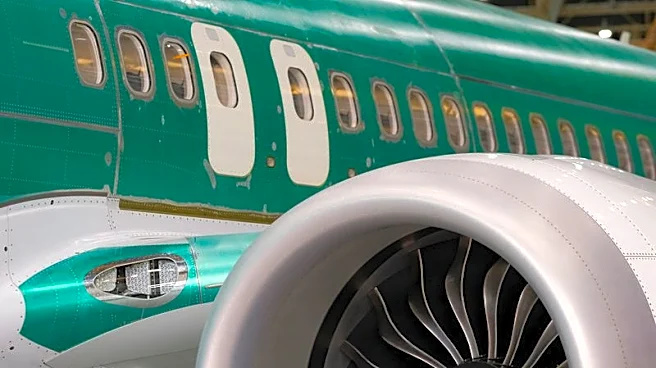
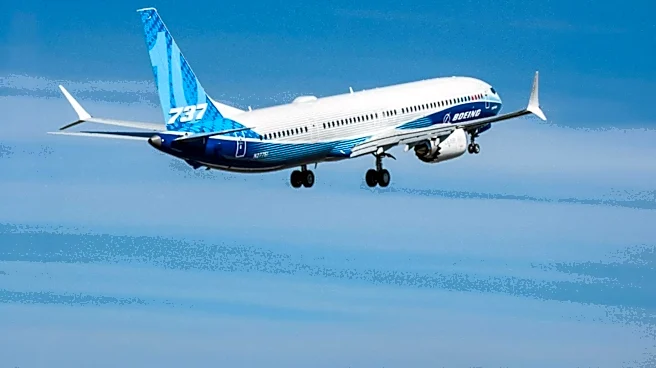
The U.S. Federal Aviation Administration (FAA) has granted certification to Boeing's 737 MAX 7, a significant achievement for the American aerospace company. This approval comes after years of delays and a more stringent certification process following
two fatal crashes involving the MAX 8 model in 2018 and 2019. Boeing has been required to implement several improvements, including updates to the flight-control software and a redesigned engine anti-ice system. The certification allows Boeing to proceed with preparations for the first deliveries of the MAX 7, which offers seating for 135 to 160 passengers and increased range compared to other MAX models. Southwest Airlines, the launch customer for the MAX 7, expressed satisfaction with the approval and anticipates the aircraft entering service in the coming months.
Why It's Important?
The certification of the Boeing 737 MAX 7 is crucial for Boeing as it seeks to regain market confidence and expand its product offerings. The approval is expected to boost Boeing's financial performance, as the company has already built several MAX 7 and MAX 10 aircraft awaiting delivery. The decision also reflects the FAA's confidence in Boeing's ability to meet safety standards, which is vital for the company's reputation and future sales. The MAX 7's entry into service will provide airlines with a more efficient aircraft option, potentially leading to cost savings and expanded route capabilities. This development is also significant for the aviation industry, as it highlights the ongoing efforts to enhance aircraft safety and reliability.
What's Next?
With the certification of the MAX 7, Boeing is now focusing on the approval of the larger MAX 10 model, which the FAA suggests could follow soon. Boeing is preparing for the first deliveries of the MAX 7, with Southwest Airlines as the initial recipient. The company is also working on completing the 737 MAX family and advancing the 777X programs. The FAA's recent decision to allow Boeing to issue airworthiness certificates for all 737 MAX and 787 airplanes indicates a positive outlook for Boeing's production capabilities. As the aviation industry continues to recover from the impacts of the COVID-19 pandemic, Boeing's ability to deliver new aircraft models will be critical in meeting the demands of airlines seeking to modernize their fleets.