






What's Happening?
Virtual taekwondo has officially made its debut as a medal event at the Asian Games, marking a significant milestone for the discipline. Sixteen athletes from fifteen National Olympic Committees are competing in an elimination tournament, with medals
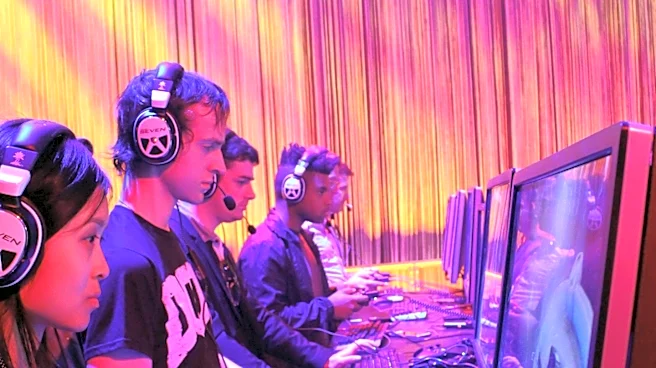
being awarded for the first time in this type of competition at a major multi-sport event. The sport, which combines physical skills with digital innovation, is particularly developed in Japan and South Korea, the latter hosting a dedicated training center and being awarded the 2027 World Championships. Specialists equipped with virtual reality headsets and sensors are participating in the Continental Games, bringing virtual taekwondo into the spotlight of the Olympic Movement. World Taekwondo President Chungwon Choue highlighted that virtual taekwondo represents an exciting evolution, blending traditional taekwondo values with digital innovation. The discipline also allows for mixed-gender matches, appealing to a younger audience and presenting itself as a mixed event.
Why It's Important?
The inclusion of virtual taekwondo as a medal event at the Asian Games is a crucial step towards its broader recognition within the international sports community, potentially influencing its future integration into other multi-sport events like the Southeast Asian Games and the Gymnasiade. This development signifies a growing trend of incorporating esports and digitally enhanced sports into traditional athletic competitions, reflecting efforts to engage younger demographics and adapt to technological advancements. The mixed-gender format of virtual taekwondo also promotes inclusivity and equality in sports, aligning with modern values. For the U.S., this could mean increased interest in virtual sports development and participation, potentially leading to new training programs, competitive leagues, and investment opportunities in sports technology. The success of virtual taekwondo at the Asian Games could serve as a model for other sports federations considering similar innovations, impacting how sports are perceived, played, and consumed globally.
What's Next?
The future of virtual taekwondo appears promising, with expectations for increased recognition from the International Olympic Committee (IOC) and further integration into various multi-sport events. The 2027 World Championships are already slated for Muju, South Korea, indicating a commitment to the sport's growth and competitive structure. The ongoing success and visibility at events like the Asian Games will be critical in demonstrating its viability and appeal to a wider audience and decision-makers within the Olympic Movement. Stakeholders, including sports federations, technology companies, and national Olympic committees, will likely monitor its performance and audience engagement closely. This could lead to further investment in virtual sports infrastructure, athlete development, and broadcasting rights, potentially creating new avenues for athletes and fans in the U.S. and beyond. The discipline's ability to attract a younger audience and offer mixed-gender competition will be key factors in its continued expansion and acceptance.
Beyond the Headlines
The emergence of virtual taekwondo as a medal event raises deeper questions about the evolving definition of 'sport' in the digital age. It blurs the lines between physical prowess and technological interaction, challenging traditional notions of athletic competition. This development could spark broader discussions on the role of virtual reality and simulation in sports training, performance, and spectator experience. Ethically, it prompts considerations about fair play, accessibility, and the potential for digital enhancements to influence outcomes. Culturally, it reflects a societal shift towards digital engagement and the increasing integration of technology into daily life, including leisure and competitive activities. The long-term impact could include a re-evaluation of sports curricula, the development of new coaching methodologies, and the creation of hybrid athletic careers that combine traditional training with virtual expertise. This trend could also influence the design of future sports venues, incorporating advanced technological infrastructure to support both physical and virtual competitions.