






What's Happening?
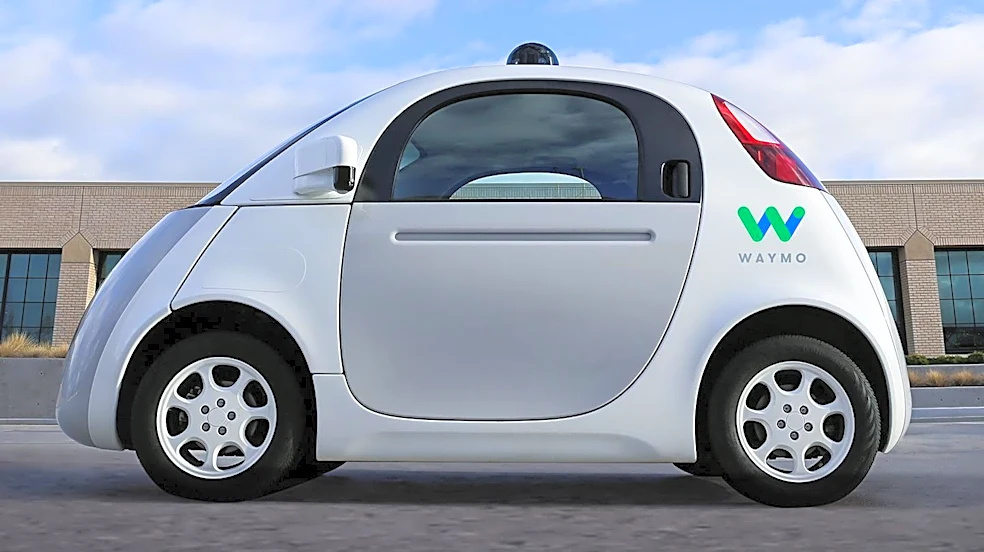
Waymo's Simulator Team is utilizing advanced machine learning (ML) algorithms to create state-of-the-art simulations for testing and training the Waymo Driver, their autonomous driving system. These simulations model realistic environments, including
various agents like vehicles, pedestrians, cyclists, and motorcyclists, as well as roads, traffic control systems, and weather conditions. The goal is to enhance the performance and fidelity of the Waymo Driver by applying ML to model the real world. The team employs cutting-edge ML technologies, such as large foundational World Models trained on extensive datasets, world understanding and reasoning capabilities for complex scenarios, and reinforcement learning for long-term credit assignment. This approach allows Waymo to rigorously test its autonomous driving systems by setting up and rolling out multiple counterfactual scenarios, ensuring the system's robustness and safety.
Why It's Important?
The application of machine learning in Waymo's simulation environment is critical for the advancement and widespread adoption of autonomous driving technology in the U.S. By creating highly realistic and diverse simulated scenarios, Waymo can test its autonomous vehicles in millions of miles equivalent of driving without the risks and costs associated with physical road testing. This significantly accelerates the development cycle, allowing for rapid iteration and improvement of the Waymo Driver. The ability to model complex and rare 'tail cases' through ML-driven simulations is particularly important for ensuring safety and reliability, which are paramount for public trust and regulatory approval. This technology has the potential to revolutionize transportation, reduce traffic accidents, and improve mobility for millions, while also creating new economic opportunities in the autonomous vehicle sector. Companies that master this simulation technology will gain a significant competitive advantage in the burgeoning self-driving market.
What's Next?
Waymo will continue to innovate in ultra-realistic world simulation by developing and scaling foundation models for embodied agents. This includes designing and training multimodal world models and generative architectures using diverse sensory data such as RGB images, video, and text. The company plans to drive closed-loop training and reinforcement learning pipelines to further enhance simulation realism, optimize policies, and improve decision-making for autonomous driving. There will also be a focus on transferring research from Waymo's foundational AI team into scalable, production-ready solutions. These efforts aim to increase the fidelity and steerability of their simulations, allowing for even more rigorous testing and validation of the Waymo Driver before deployment on public roads. The ongoing development will likely lead to more sophisticated autonomous driving capabilities and broader deployment of Waymo's services.
Beyond the Headlines
The extensive use of machine learning in autonomous vehicle simulation raises profound ethical and legal questions regarding accountability and safety. As AI systems become more complex and make critical decisions on the road, determining liability in the event of an accident becomes a significant challenge. The 'black box' nature of some advanced ML models also presents a hurdle for regulatory bodies seeking to understand and certify their safety. Furthermore, the reliance on simulated data, while efficient, necessitates robust validation methods to ensure that the simulated environment accurately reflects the unpredictable complexities of the real world. The long-term societal impact includes potential job displacement in traditional driving sectors and the need for new infrastructure to support autonomous fleets. Waymo's advancements are not just about technology; they are about shaping the future of urban planning, legal frameworks, and the very fabric of daily life.