






What's Happening?
Aidan Owens, executive chef at Herb & Sea in Encinitas, San Diego, is championing a deeply localized and sustainable approach to cooking, moving beyond the conventional 'farm-to-table' concept. Owens, who grew up on a farm in Byron Bay, Australia, emphasizes
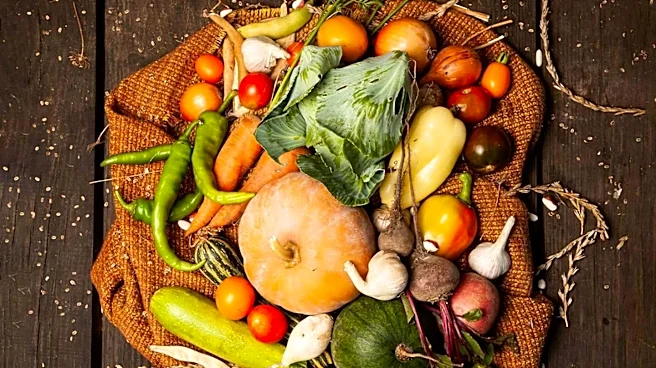
sourcing ingredients directly from local producers, such as fishermen Ryan Sebo and Joe Daly, to cut out middlemen and ensure freshness. He believes this direct alliance not only guarantees high-quality ingredients but also puts more money into the pockets of the people doing the work. Owens' philosophy involves cooking what is abundant and nearby, utilizing local fish and San Diego citrus, and finding creative uses for less common ingredients like stingray cheeks. To minimize waste, he transforms scraps into new products, such as apple ponzu from apples going bad or marmalade from lemons. He also strategically crafts menu language to encourage diners to try unfamiliar but sustainable options, like using 'lengua' instead of 'tongue' or 'skate' for 'stingray throat.'
Why It's Important?
Chef Aidan Owens' approach to sustainability and local sourcing in San Diego holds significant importance for the U.S. food industry and consumer trends. His advocacy for direct relationships with producers challenges the traditional supply chain, potentially influencing how restaurants nationwide procure ingredients. This model could empower local farmers and fishermen, fostering stronger regional economies and promoting food security. For U.S. consumers, it means access to fresher, higher-quality ingredients and a deeper connection to their food sources. The emphasis on reducing waste and utilizing overlooked ingredients also aligns with growing environmental consciousness and the demand for sustainable practices in the U.S. food sector. Owens' methods could inspire other chefs and restaurateurs to adopt similar strategies, leading to a more resilient, ethical, and environmentally friendly food system across the country, impacting everything from agricultural practices to culinary education.
What's Next?
Chef Owens plans to continue strengthening his direct alliances with local producers, such as fishermen Ryan Sebo and Joe Daly, to ensure a consistent supply of fresh, seasonal ingredients. He will likely further refine his menu to reflect the abundance of local offerings and continue to educate diners on the value of sustainable choices through innovative dishes and menu descriptions. The success of his model at Herb & Sea could serve as a blueprint for other restaurants in San Diego and potentially across the U.S., encouraging a broader shift towards hyper-local sourcing and waste reduction. This could lead to increased demand for locally produced goods, fostering growth in regional agriculture and fisheries. Additionally, his philosophy might influence culinary schools and industry associations to integrate more comprehensive sustainability and direct-sourcing practices into their curricula and best practices.
Beyond the Headlines
Chef Owens' philosophy delves into the ethical and cultural dimensions of food, challenging the notion that sustainability needs to be a buzzword or a performative act. His upbringing on a farm instilled a natural, instinctual approach to food that prioritizes honesty, respect for ingredients, and minimal waste. This perspective suggests a long-term shift in culinary values, moving away from exotic imports towards celebrating regional bounty and the people who cultivate it. For the U.S., this could trigger a re-evaluation of what constitutes 'good food,' emphasizing not just taste but also the environmental and social impact of its production. It highlights the potential for chefs to become powerful advocates for local economies and ecological stewardship, transforming dining into an act of community support and environmental responsibility. This deeper implication suggests a cultural evolution where food becomes a more conscious reflection of its origins and its journey to the plate.