






What's Happening?
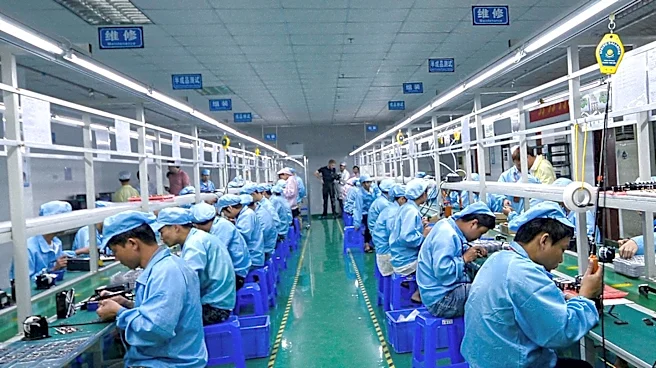
Brad Setser, a senior fellow at the Council on Foreign Relations and former U.S. trade official, warns of a 'China Shock 2.0,' where China's economic model, characterized by state-directed investment and export-led growth, now dominates advanced manufacturing
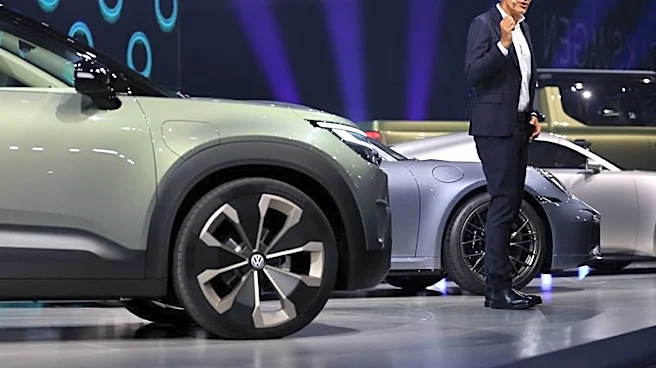
sectors. Unlike the first 'China Shock' around 2002, which saw China excel in low-end manufacturing, this new phase focuses on high-tech industries such as electric vehicles (EVs), batteries, solar panels, and increasingly, software and AI. Setser attributes this shift to China's response to the 2021 property market collapse, where Beijing redirected financial resources into advanced manufacturing to offset economic fallout. This strategy has led to staggering trade shifts, with China's car exports surging from under one million to approximately 10 million annually within five years, while auto imports significantly declined. Post-pandemic, Chinese exports have grown at two to three times the pace of world trade, contributing an estimated 1.5–2 percentage points to its growth.
Why It's Important?
This 'China Shock 2.0' carries significant implications for the U.S. economy and global trade. The U.S. manufacturing sector, particularly in emerging high-tech areas, could face intense competition, potentially leading to job displacement and reduced domestic production, similar to the impact of the first 'China Shock' on factory towns. The dominance of Chinese advanced manufacturing could create dependencies for critical components and technologies, posing national security risks and economic vulnerabilities for the U.S. and its allies. Europe, particularly its industrial heartland like Germany, is expected to be hit harder than the U.S. as China pushes into high-end industrial sectors. This situation necessitates a strategic response from the U.S. government and industries to foster domestic innovation, strengthen supply chains, and protect intellectual property in critical sectors. The potential for 'China Shock 3.0' in AI, driven by cheap, capable open-source models, further underscores the urgency for proactive measures.
What's Next?
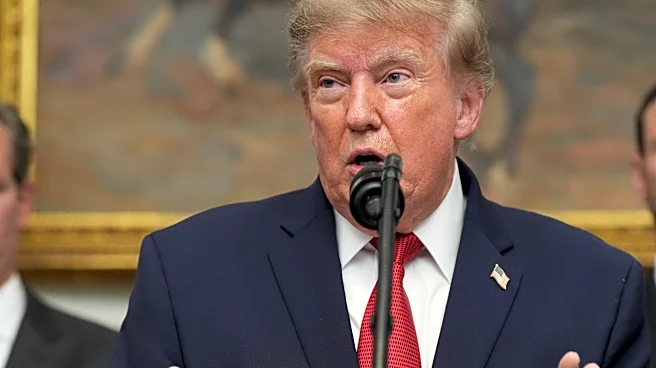
Setser suggests that the U.S. should extend its security alliances into economic ones, forming a U.S.-Europe bloc to build competitive EV and magnet industries independent of Chinese reliance. This approach would involve strategic investments, collaborative research, and potentially coordinated trade policies to counter China's state-backed industrial policies. The debate over tariffs, as seen during the Trump administration, will likely continue, with a focus on targeted measures that avoid alienating allies. The U.S. will also need to address China's leverage in critical minerals and rare earths, which are essential for advanced manufacturing. Furthermore, the potential for AI to become 'China Shock 3.0' means that policymakers and industry leaders must consider strategies to maintain U.S. leadership in artificial intelligence, including fostering innovation, protecting data, and ensuring ethical development. This could involve significant government funding for AI research, talent development, and regulatory frameworks to safeguard against unfair competition.
Beyond the Headlines
The 'China Shock 2.0' highlights a fundamental divergence in economic models: China's state-directed capitalism versus the market-driven economies of the U.S. and Europe. This clash of economic philosophies has profound geopolitical implications, as technological and manufacturing leadership increasingly translates into global power. The ethical dimension arises from the potential for unfair competition, intellectual property theft, and the use of state subsidies to gain market dominance, which can undermine fair trade practices and global economic stability. Culturally, this shift could lead to a re-evaluation of the role of government in industrial policy and the balance between free markets and strategic national interests. The long-term shift could see a more fragmented global economy, with distinct technological and manufacturing blocs, potentially leading to increased trade tensions and a more complex international relations landscape. The challenge for the U.S. is not just to compete, but to redefine its economic strategy in an era where advanced manufacturing is a key determinant of national power and prosperity.