



What's Happening?
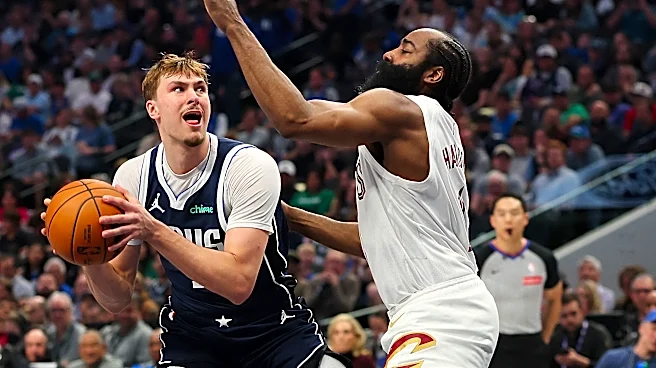
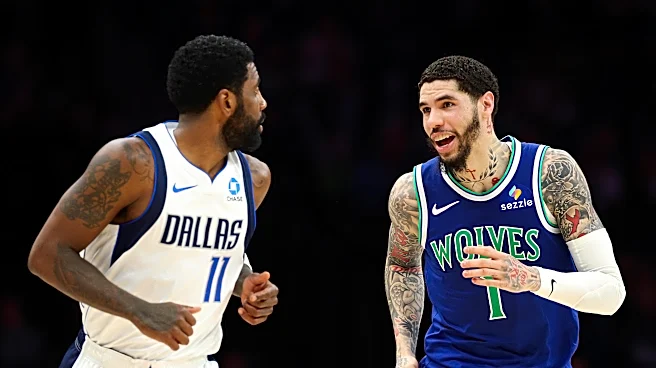
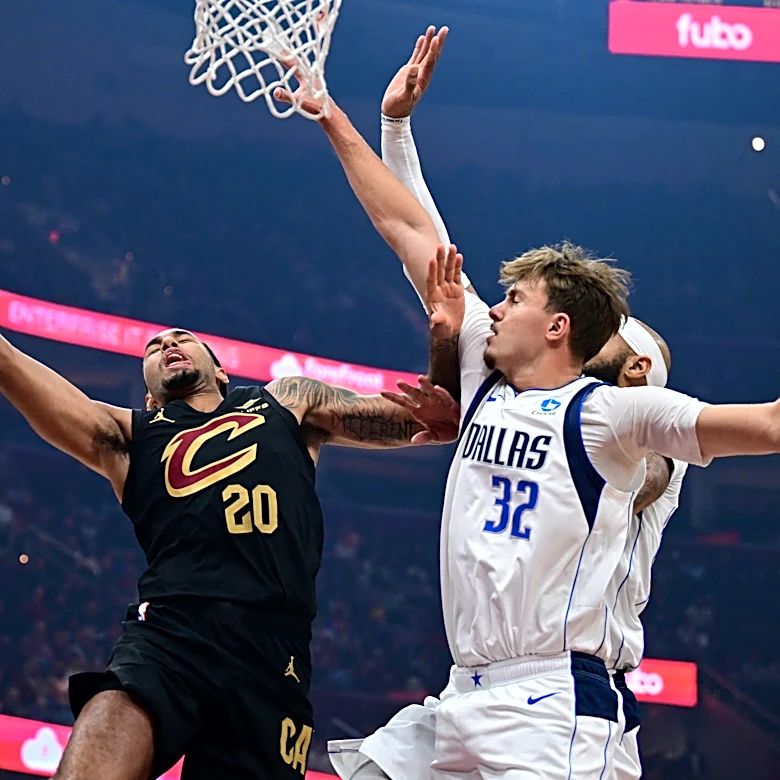
Cooper Flagg, a player for the Dallas Mavericks, has been leading the team in scoring with an average of 25.3 points per game, despite a recent significant loss to the Minnesota Timberwolves. Prior to this defeat, Flagg showcased strong performances,
averaging 29.7 points, 8.3 rebounds, and 8.3 assists during a three-game winning streak. This included a 43-point, 10-rebound game, marking his fifth 40-point game as a teenager, a record. He also ranks second only to LeBron James in 25-point, 5-rebound, 5-assist games as a teenager. However, the Mavericks' overall performance has been inconsistent, with the team holding a 7-5 record after winning three consecutive home games against Utah, Brooklyn, and Indiana, followed by a 133-94 loss to Minnesota. The team's reliance on Flagg and Kyrie Irving for offensive production has been highlighted, with other players struggling to provide consistent support.
Why It's Important?
The performance of Cooper Flagg is crucial for the Dallas Mavericks, as he represents a significant part of their future success. His ability to consistently deliver high-scoring games and contribute across multiple statistical categories demonstrates his potential to be a franchise cornerstone. However, the team's over-reliance on Flagg and Kyrie Irving exposes a critical vulnerability: a lack of consistent offensive support from the rest of the roster. This imbalance can lead to unpredictable team performance, as seen in their recent blowout loss to the Timberwolves when the star duo struggled. For the Mavericks to contend for a championship, they need other players to step up and provide reliable scoring and playmaking. The current situation puts immense pressure on Flagg and Irving, and without a more balanced attack, the team may struggle against stronger opponents who can effectively neutralize their primary scorers. This highlights a common challenge in the NBA where even exceptional individual talent needs a robust supporting cast to achieve sustained team success.
What's Next?
The Dallas Mavericks are scheduled to face the Cleveland Cavaliers and Boston Celtics in a back-to-back road trip, followed by a home game against the Golden State Warriors. These upcoming games will be critical in assessing the team's ability to rebound from their recent loss and demonstrate more consistent performance, particularly from players beyond Cooper Flagg and Kyrie Irving. The coaching staff will likely focus on developing a more balanced offensive strategy and encouraging other players like P.J. Washington and Naji Marshall to increase their scoring consistency. The team's shooting, currently ranked 22nd in the NBA at 33.6% from three-point range, will need significant improvement to counter defenses that focus on stopping Flagg and Irving. The development of younger players and the integration of new strategies will be key factors in determining the Mavericks' trajectory for the remainder of the season and their potential to make the playoffs.
Beyond the Headlines
The Mavericks' current situation with Cooper Flagg and Kyrie Irving underscores a broader trend in professional basketball: the increasing importance of a 'superstar duo' model, but also the inherent risks when the supporting cast is inconsistent. While Flagg's individual brilliance is undeniable, the team's struggles when he and Irving are not 'clicking' highlight the delicate balance required for team success. This scenario raises questions about roster construction, player development, and the strategic decisions made by front offices. The ethical implication for young stars like Flagg is the immense pressure to perform at an elite level consistently, which can be physically and mentally taxing. Long-term, if the Mavericks cannot build a more cohesive and offensively diverse team around their stars, they risk squandering Flagg's prime years and failing to achieve their championship aspirations, despite having generational talent on their roster. This situation could also influence future trade decisions and free-agent acquisitions as the team seeks to address its depth issues.