



What's Happening?
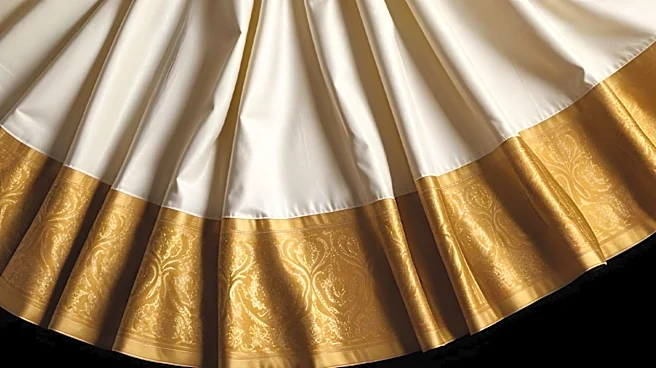
Satin fabric is emerging as a dominant fashion trend in 2026, with numerous styles offering a luxurious aesthetic at accessible price points. This trend is characterized by satin's soft texture, fluid drape, and pearly sheen, which contribute to an expensive
look. The popularity extends across various clothing items, including work skirts, lounge pants, dresses, and everyday tops. The trend is noted for its timeless appeal, blending elements of 1920s socialite fashion with contemporary New York styles. Many pieces are available for under $50, making high-end appearances achievable for a broader consumer base. Examples include satin skirts, two-piece lounge sets, short-sleeve tops, gold trousers, midi dresses, jumpsuits, blazers, polka dot skirts, maxi dresses, and satin tank tops. Celebrities like Jennifer Lawrence, Amal Clooney, and Jennifer Lopez have been seen sporting satin pieces, further solidifying its status as a key trend.
Why It's Important?
This fashion trend signifies a shift towards accessible luxury within the U.S. retail market. By offering garments that appear high-end but are affordably priced, retailers can tap into a wider consumer base seeking sophisticated styles without significant investment. This trend could influence manufacturing and supply chain decisions, potentially increasing demand for satin and similar materials. For consumers, it provides an opportunity to elevate their wardrobes with versatile pieces that transition from casual to formal settings. The emphasis on timelessness also suggests a move away from fast-fashion cycles, promoting more enduring wardrobe staples. The celebrity endorsement further amplifies its importance, driving consumer interest and purchasing decisions, and potentially impacting sales for brands that align with this aesthetic. This trend also highlights the power of social media and celebrity influence in shaping consumer preferences and market demand.
What's Next?
The continued prominence of satin in fashion is expected to influence upcoming collections from various brands, with more designers likely incorporating the fabric into their offerings. Consumers can anticipate a wider array of satin garments across different price points and styles. Retailers may focus on marketing campaigns that highlight the luxurious look and affordability of satin pieces. The trend's versatility suggests it will remain relevant across seasons, potentially leading to its integration into capsule wardrobes. Fashion influencers and stylists are also likely to continue showcasing satin outfits, further embedding the trend into mainstream fashion. The success of this trend could also pave the way for other traditionally luxurious fabrics to be reinterpreted into more affordable, everyday wear.
Beyond the Headlines
The rise of affordable luxury, exemplified by the satin trend, reflects broader societal desires for aspirational living without financial strain. This trend touches upon themes of democratizing fashion, where high-end aesthetics become attainable for the average consumer. It also raises questions about the perception of value and quality in clothing, as consumers prioritize appearance over traditional markers of luxury. The emphasis on timelessness could also signal a growing consumer consciousness towards sustainable fashion choices, favoring pieces that have longevity over fleeting trends. Furthermore, the trend highlights the ongoing influence of celebrity culture on consumer behavior, demonstrating how public figures can shape purchasing habits and define what is considered fashionable. This shift could also impact the resale market, as more affordable yet stylish items become available.