






What's Happening?
Applied Materials, a leading supplier of equipment for semiconductor factories, projects that global spending on chipmaking equipment will increase by over 30% in 2027. The company's executives, including CEO Gary Dickerson and CFO Brice Hill, stated
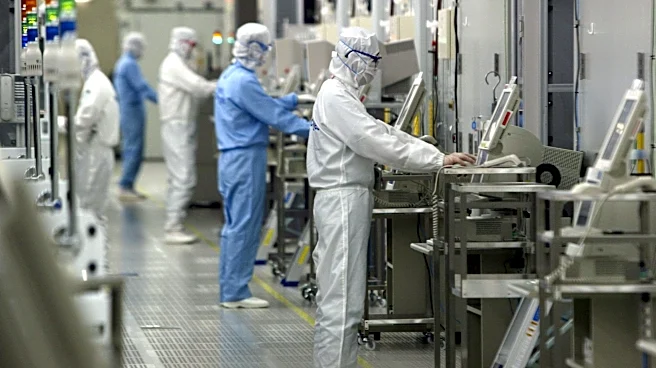
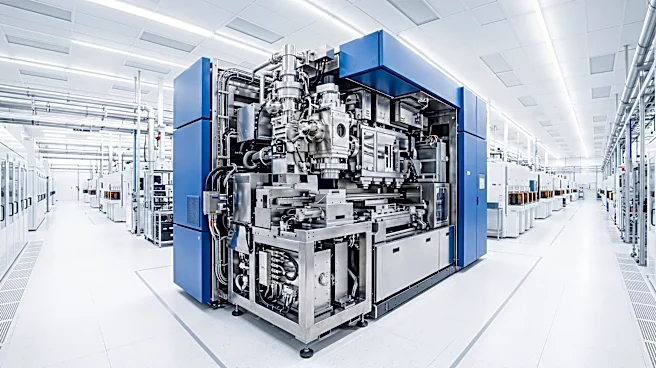
that the primary limiting factor for this growth will be the availability of cleanroom space in chip manufacturing plants. Factories producing leading-edge logic chips and DRAM memory are currently operating at full capacity. Applied Materials is tracking more than 20 new fabs and line expansions scheduled to become operational in 2027. The company reported a record fiscal fourth quarter with $10.4 billion in revenue, a 53% increase year-over-year, and adjusted profit up 92% to $4.16 per share. Applied Materials plans to double its system production capacity by 2028 and more than double its factory and lab footprint by 2030 to meet anticipated demand.
Why It's Important?
This forecast from Applied Materials underscores the intense demand for semiconductor manufacturing capabilities, driven significantly by the artificial intelligence boom. The constraint of cleanroom space highlights a critical bottleneck in the global supply chain for advanced chips, which could impact the pace of technological innovation and the availability of various electronic devices. For U.S. industries, this means continued pressure to expand domestic manufacturing capacity, as outlined in initiatives like the CHIPS and Science Act. Companies reliant on semiconductors, from consumer electronics to automotive and defense sectors, could face ongoing supply challenges if cleanroom expansion doesn't keep pace with demand. The increased spending on chipmaking equipment also signals robust growth for companies within the semiconductor equipment ecosystem.
What's Next?
The semiconductor industry will likely prioritize the rapid expansion of cleanroom facilities and overall factory capacity to meet the projected surge in demand for chipmaking equipment. Applied Materials and its competitors will continue to invest heavily in increasing their own production capabilities to supply the necessary tools. Chip manufacturers are expected to accelerate their construction and expansion plans for new fabs, with a focus on optimizing cleanroom availability. This trend will likely lead to increased capital expenditure across the semiconductor sector. Furthermore, governments and industry stakeholders may explore collaborative efforts to streamline the construction and qualification processes for new manufacturing facilities to alleviate the cleanroom bottleneck.
Beyond the Headlines
The emphasis on cleanroom space as the primary growth limiter reveals the intricate and highly specialized nature of semiconductor manufacturing. It highlights that simply having the capital or the desire to build a factory is not enough; the physical infrastructure, particularly the ultra-clean environments required for wafer processing, presents a significant hurdle. This challenge could lead to innovations in cleanroom design and construction, potentially driving new efficiencies or modular approaches. Moreover, the intense demand for advanced chips, particularly for AI, suggests a fundamental shift in technological priorities, where the ability to produce these components becomes a strategic national asset. The competition for cleanroom capacity could also influence geopolitical dynamics, as nations vie for control over critical manufacturing infrastructure.