



What's Happening?
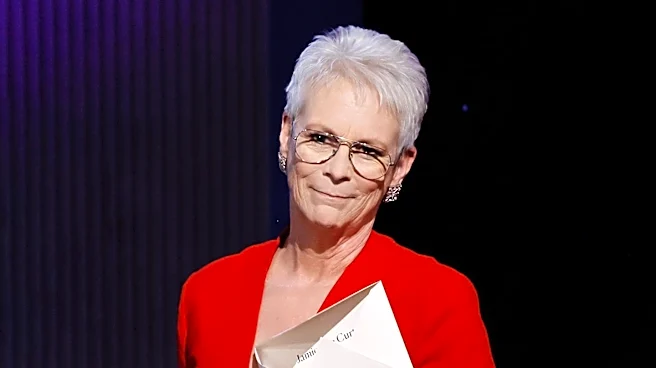
Actress Jamie Lee Curtis has been noted for her decision to stop coloring her hair around the year 2000, at the age of 42, and embrace her natural gray hair. This move, initially met with warnings from some in the entertainment industry about potential
career repercussions, has since become one of her signature looks. She is part of a growing trend among famous women, including Patti Smith, Andie MacDowell, Helen Mirren, Jane Fonda, Meryl Streep, Whoopi Goldberg, Paget Brewster, and Sarah Jessica Parker, who are choosing to show their natural gray hair. This shift challenges the long-standing Hollywood norm where coloring hair to appear younger was almost an unwritten rule for women in show business. These celebrities are demonstrating that age and good style can coexist, and that gray hair can be a deliberate and elegant personal style choice rather than something to be concealed.
Why It's Important?
This trend among prominent actresses to embrace their natural gray hair holds significant cultural importance, particularly within the U.S. entertainment industry and broader society. For decades, Hollywood has perpetuated an often unrealistic standard of youth and beauty, pressuring women to conceal signs of aging. Jamie Lee Curtis and her peers are actively dismantling these expectations, offering a powerful counter-narrative that celebrates natural aging and authenticity. This movement can empower countless women outside of Hollywood to feel more comfortable and confident in their own skin, reducing the societal pressure to conform to artificial beauty ideals. Economically, this shift could influence the beauty industry, potentially leading to a decrease in demand for hair dyes aimed at covering gray hair and an increase in products that enhance natural hair color and health. It also highlights a broader cultural move towards self-acceptance and challenging conventional beauty norms, impacting how age is perceived and represented in media.
What's Next?
The continued visibility of actresses like Jamie Lee Curtis embracing their gray hair is likely to further normalize this choice within the entertainment industry and public perception. We may see more celebrities follow suit, leading to a more diverse representation of aging on screen and in media. This could prompt beauty brands to adapt their marketing strategies, shifting focus from anti-aging to age-positive messaging and products that cater to natural hair colors. Directors and producers might also become more open to casting actresses with gray hair in a wider range of roles, moving beyond stereotypical 'grandmother' parts. Furthermore, this trend could spark more public discourse on ageism and beauty standards, encouraging a more inclusive and accepting view of aging in American society. The long-term impact could be a significant cultural shift where natural gray hair is seen as a mark of elegance and confidence, rather than a sign of decline.
Beyond the Headlines
Beyond the immediate visual impact, the decision by Jamie Lee Curtis and others to embrace gray hair touches upon deeper ethical and cultural dimensions. It challenges the pervasive ageism embedded in many aspects of U.S. society, particularly within industries that heavily rely on visual appeal. By openly displaying their natural hair, these actresses are making a statement about authenticity and self-acceptance, implicitly questioning the value placed on perpetual youth. This movement can foster a more honest conversation about the aging process and its representation, potentially leading to a re-evaluation of how older women are perceived and valued in professional and social contexts. It also highlights the power of celebrity influence in shaping cultural norms, demonstrating how individual choices by public figures can contribute to broader societal change and encourage a more inclusive definition of beauty that transcends age.