





What's Happening?
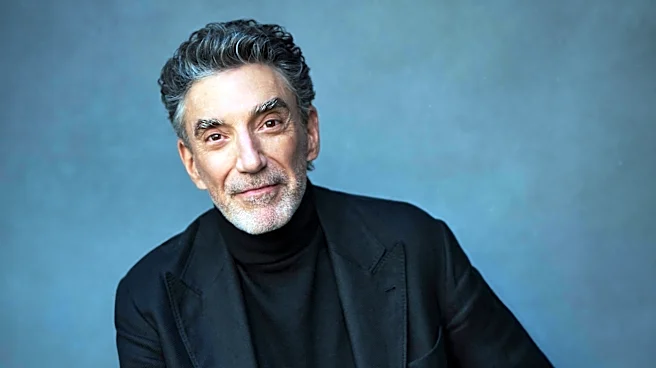
Chuck Lorre, creator of 'Two and a Half Men,' revealed in his upcoming memoir 'Sitcom' that Hugh Grant was initially considered to replace Charlie Sheen after Sheen's departure in 2011. Sheen was fired during the eighth season due to public conflicts
with Lorre and personal issues. Lorre and co-creator Lee Aronsohn even wrote test scenes for Grant. Grant was offered a substantial deal of $750,000 per episode for a four-day work week. However, Grant ultimately declined the role, citing his fear of performing in front of a live studio audience, a common feature of sitcoms. Despite Lorre's assurance that they could use canned laughter instead of a live audience, Grant withdrew from negotiations, leading to Ashton Kutcher being cast as Sheen's replacement for the ninth season, which premiered in 2011.
Why It's Important?
This revelation highlights the significant challenges faced by television productions when a lead actor departs under controversial circumstances. The search for a replacement for a highly successful and well-known character like Charlie Harper was a critical decision that could have determined the fate of 'Two and a Half Men.' The offer to Hugh Grant, a prominent film actor, indicates the network's and creators' willingness to invest heavily to maintain the show's viewership and revenue. Grant's reason for declining, his discomfort with live audiences, sheds light on the unique demands of sitcom acting compared to film, and how these preferences can influence major casting decisions in the entertainment industry. The eventual casting of Ashton Kutcher, who successfully continued the show for four more seasons, demonstrates the adaptability required in television production.
What's Next?
While 'Two and a Half Men' concluded in 2015, the story of Hugh Grant's near-casting continues to be a notable anecdote in television history, offering insights into the behind-the-scenes decision-making processes of major network shows. Chuck Lorre's memoir, 'Sitcom,' is expected to provide further details and context regarding this and other pivotal moments in the show's production. This type of historical account can inform future casting strategies in the entertainment industry, particularly when faced with unexpected changes to a show's core cast. It also reinforces the idea that even highly lucrative offers may not always align with an actor's personal or professional preferences.
Beyond the Headlines
The near-casting of Hugh Grant for 'Two and a Half Men' underscores the intricate balance between creative vision, financial incentives, and individual actor preferences in Hollywood. It reveals that even for a show as popular and financially successful as 'Two and a Half Men,' securing talent involves navigating personal comfort levels and artistic demands. This incident also subtly highlights the cultural differences in acting styles and preferences between film and television, particularly the live audience component of traditional sitcoms. The decision-making process behind such a high-stakes replacement reflects the broader business strategies employed by studios and networks to protect their investments and maintain audience engagement in a competitive media landscape.