



What's Happening?
Bruce Logan, a celebrated British-born cinematographer, visual effects artist, and director, passed away on April 10, 2025, in Los Angeles at the age of 78. Logan's extensive career spanned several decades, leaving an indelible mark on cinematic history.
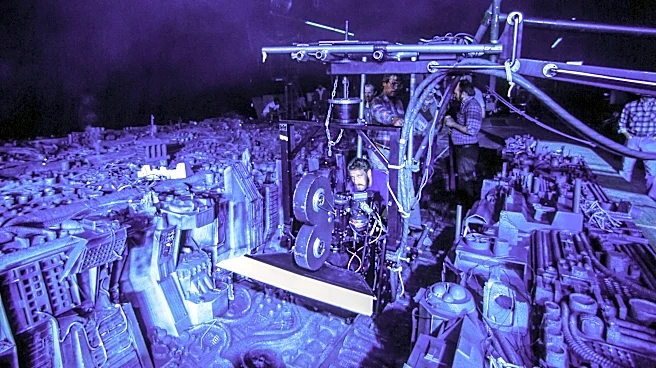
He was instrumental in creating the computer screens and main title for Stanley Kubrick's '2001: A Space Odyssey' as a teenager. Later, he operated the high-speed camera that captured the iconic Death Star explosion in 'Star Wars' and served as the director of photography for 'Tron,' one of the pioneering films in computer-generated imagery. Logan's work also included directing commercials, music videos for artists like Madonna and Prince, and his own feature film, 'Lost Fare,' which garnered several festival awards. His final released credit was as director of photography on 'Letters at Christmas' (2024). Logan was a member of prestigious organizations such as the American Society of Cinematographers, the Academy of Motion Picture Arts and Sciences, and the Directors Guild of America.
Why It's Important?
Bruce Logan's passing marks the loss of a significant figure in the evolution of filmmaking, particularly in the realm of visual effects and cinematography. His early contributions to '2001: A Space Odyssey' set a precedent for cinematic innovation, demonstrating the potential of visual storytelling. His role in 'Star Wars' helped define the visual language of modern blockbusters, influencing generations of filmmakers and special effects artists. Furthermore, his work on 'Tron' was groundbreaking, pushing the boundaries of computer-generated imagery and paving the way for its widespread adoption in cinema. Logan's career exemplified a blend of technical mastery and artistic vision, contributing to the development of visual techniques that are now commonplace in the industry. His legacy will continue to inspire future cinematographers and visual effects practitioners, underscoring the importance of innovation and craftsmanship in filmmaking.
What's Next?
While Bruce Logan's active career has concluded with his passing, his influence is expected to endure through the films he helped create and the techniques he pioneered. Film schools and industry professionals will likely continue to study his contributions to visual effects and cinematography, particularly his innovative approaches to projects like '2001: A Space Odyssey,' 'Star Wars,' and 'Tron.' His work may be featured in retrospectives, documentaries, and academic analyses exploring the history of cinematic technology and artistry. Additionally, his final unreleased projects, such as 'Tracing Force,' 'The Girls of St. Joan,' and 'Off the Grid Comedy: Belize,' may see posthumous release, offering further insight into his later creative endeavors. The film community will likely continue to honor his memory through various tributes and recognitions, solidifying his place as a pivotal figure in cinematic history.
Beyond the Headlines
Beyond his direct contributions to iconic films, Bruce Logan's career highlights a broader narrative about the intersection of technology and art in cinema. His journey from animating toy soldiers as a child to pioneering visual effects in Hollywood underscores the importance of early passion and continuous innovation. Logan's philosophy, such as his belief that 'lenses will have more of an influence on the look of your picture than your camera,' offers valuable insights into the craft of cinematography, emphasizing artistic choice over mere technological advancement. His willingness to embrace new technologies while maintaining a strong artistic vision helped shape the visual grammar of modern cinema. Logan's life also serves as a testament to the collaborative nature of filmmaking, having worked with legendary figures like Stanley Kubrick, Douglas Trumbull, and George Lucas. His legacy extends beyond individual films, representing a commitment to pushing creative and technical boundaries in the pursuit of cinematic excellence.