


What's Happening?
The concept of 'slow living' is gaining traction as a lifestyle approach that prioritizes mindfulness, intentionality, and quality over constant speed and productivity. This philosophy encourages individuals to live with less haste and more meaning, particularly
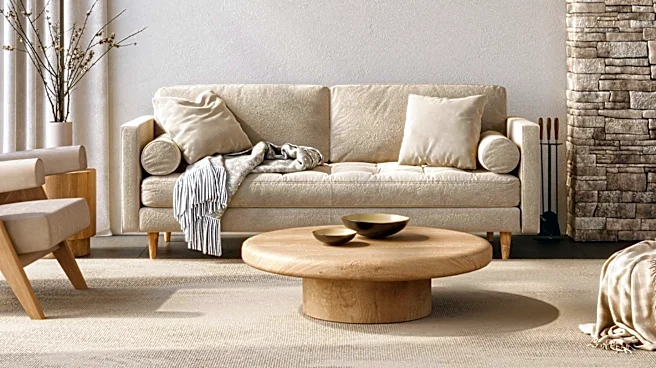
during colder seasons when there's a natural inclination to seek comfort at home. It advocates for conscious consumption and sustainable living, which includes using natural materials for home insulation and designing living spaces that foster human connection rather than digital isolation. For instance, instead of making the television the focal point of a living room, slow living suggests arranging furniture in a circular or 'U' shape to encourage dialogue and interaction. The approach also promotes passive heating solutions, such as using thick natural fiber rugs and dense curtains to retain warmth, thereby reducing reliance on electric heaters and lowering energy consumption. This shift aims to create a more welcoming and energy-efficient home environment.
Why It's Important?
The emphasis on slow living is significant as it challenges the prevailing culture of rapid consumption and constant busyness, which often leads to increased stress and environmental impact. By promoting conscious consumption, it encourages consumers to invest in durable, multi-functional items, thereby reducing waste associated with 'fast furniture' and ephemeral trends. This has implications for U.S. industries, pushing them towards more sustainable production methods and materials. For individuals, adopting slow living can lead to improved well-being through reduced stress, stronger personal connections, and a more harmonious living environment. Economically, it can result in long-term savings by reducing energy consumption and the need for frequent replacements of household items. Socially, it fosters a return to more meaningful interactions and a greater appreciation for the present moment, counteracting the isolating effects of digital over-reliance.
What's Next?
As awareness of slow living grows, there may be a continued shift in consumer preferences towards products and services that align with its principles. This could lead to increased demand for sustainably sourced home goods, energy-efficient building materials, and designs that promote human interaction. Businesses in the home decor, furniture, and textile industries may adapt by offering more durable, eco-friendly, and timeless products. Furthermore, urban planning and architectural design could begin to incorporate principles that support slower, more connected lifestyles, such as creating walkable communities and communal spaces. Individuals are likely to explore practical ways to integrate slow living into their daily routines, from mindful consumption habits to reconfiguring their living spaces for greater comfort and connection. Educational initiatives promoting sustainable living and mindfulness could also see increased interest.
Beyond the Headlines
The slow living movement extends beyond mere aesthetics or personal preference; it represents a deeper cultural shift towards re-evaluating societal values. Ethically, it encourages a more responsible relationship with resources and the environment, challenging the throwaway culture that has dominated modern consumerism. Legally, this could eventually influence policy-making related to product durability, waste reduction, and energy efficiency standards. Culturally, it signifies a growing desire for authenticity and meaning in an increasingly fast-paced and digital world. This philosophy could trigger long-term shifts in how people perceive success and well-being, moving away from purely material accumulation towards a greater appreciation for time, relationships, and environmental stewardship. It also highlights the potential for individuals to exert agency in shaping their immediate environments to better reflect their values, fostering a sense of calm and purpose in daily life.