
What's Happening?
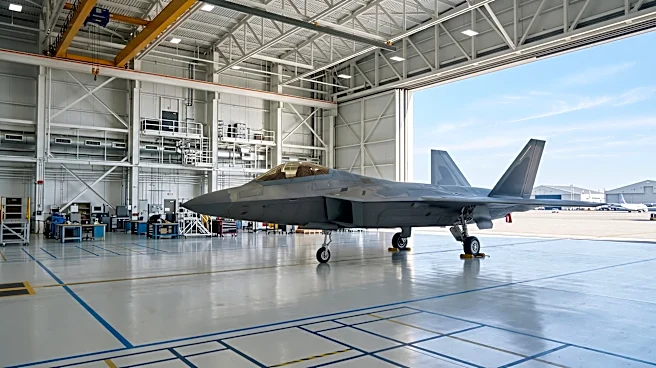
Shield AI has announced the expansion of its U.S. operations with two new sites dedicated to the development and production of its AI-piloted fighter jet, X-BAT. X-Forge 2, located at the Newton City-County
Airport in Kansas, will serve as the flight test and sustainment hub for the aircraft. Every X-BAT will undergo production acceptance testing in Newton before delivery, and the site will also support development flight testing and act as the center for maintenance, repair, and overhaul (MRO) for the fleet. Shield AI is working with the City of Newton and Harvey County to expand its footprint there. X-Forge 3, based in Des Moines, Washington, just south of Seattle, is designated as the production home for the X-BAT. This marks Shield AI's first Puget Sound site, and the company anticipates growth in the region as production rates increase. These new facilities, alongside X-Forge 1 in Frisco, Texas, will manage the X-BAT's journey from prototype through delivery and throughout its operational life.
Why It's Important?
This expansion signifies a substantial investment in U.S. aerospace manufacturing and technology, particularly in the realm of AI-piloted defense systems. The establishment of these facilities is projected to create thousands of jobs and inject billions of dollars into the regional economies of Kansas, Washington, and Texas. For instance, the Newton area is expected to see about 1,800 jobs in the early 2030s, growing to approximately 2,900 by 2046, adding roughly $5 billion to the regional economy. The Seattle-Tacoma-Bellevue region could gain about 8,000 jobs in the early 2030s, increasing to around 27,000 by 2046, contributing an estimated $73 billion. This initiative leverages existing aerospace expertise and infrastructure in these states, reinforcing their roles as key centers for advanced aviation. The X-BAT, designed for vertical takeoff and landing and equipped with AI-piloted capabilities, represents a significant advancement in national security and defense technology, offering a survivable strike fighter that can operate from diverse locations without runways.
What's Next?
X-BAT production is slated to commence in 2029, reaching full rate in the early 2030s. Flight testing for the X-BAT is scheduled to begin later this year. Shield AI will continue to build, operate, and hire at its prototyping site in Frisco, Texas. The company plans to expand its presence in Newton, Kansas, and is actively building out its Des Moines, Washington site, with hiring for the program already underway in the region. Local governments and educational institutions in Kansas, such as Wichita State University and WSU Tech, are expected to continue supporting the workforce pipeline for these advanced aerospace roles. The long-term plan involves Kansas maintaining the fleet for decades, ensuring ongoing economic and national security contributions from the state.
Beyond the Headlines
The strategic placement of these facilities in regions with established aerospace industries highlights a broader trend of leveraging existing skilled labor and infrastructure for cutting-edge defense projects. The X-BAT's reliance on AI-piloted technology and its ability to operate without GPS or communications, powered by Shield AI's Hivemind autonomy software, points to a future where autonomous systems play an increasingly critical role in military operations. This development could accelerate the integration of AI into defense strategies, potentially reshaping tactical approaches and operational capabilities. The economic analyses underscore the significant ripple effects of such large-scale defense contracts, extending beyond direct employment to a vast network of suppliers and supporting industries, thereby strengthening the U.S. industrial base and technological leadership in aerospace.