





What's Happening?
The 71st annual Bowling Green Holiday Parade took place under unusually warm weather conditions, with temperatures in the 60s. This starkly contrasted with previous years, where participants often faced freezing temperatures, including one instance five
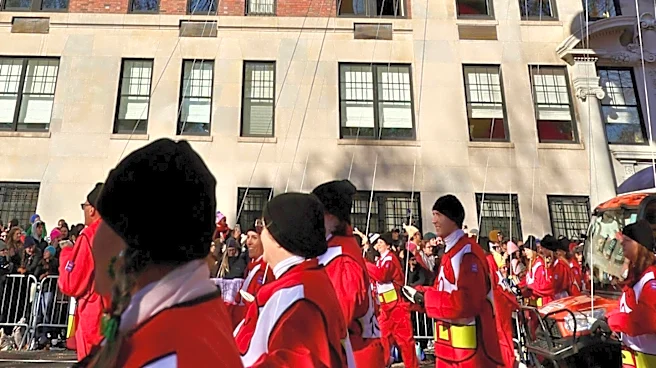
years ago when the Elmwood Marching Band's brass instruments froze. The two-hour parade featured over 110 entries, stretching down Main Street from Poe to Napoleon roads, with musical performances at the four downtown corners. Participants, including marching bands, dance troupes, and baton twirlers, expressed relief and enjoyment due to the mild weather, which allowed for more comfortable performances and spectating. The event, themed 'Land of Sweets,' showcased colorfully decorated floats, community organizations, and local businesses, culminating with Santa Claus. The Bowling Green State University Marching Band, with over 500 members, was a highlight, performing holiday songs and pieces referencing their upcoming Rose Bowl Parade appearance.
Why It's Important?
The unseasonably warm weather for the Bowling Green Holiday Parade highlights broader discussions around climate patterns and their impact on traditional seasonal events. While beneficial for this specific event, allowing for greater participant comfort and potentially higher attendance, it also subtly reflects changing environmental conditions. For local communities, such parades are significant cultural and economic drivers, fostering community spirit and drawing visitors. The comfort of participants, especially those performing outdoors for extended periods, directly influences the quality of the event and their willingness to participate in future years. The positive experience this year could boost morale and engagement for future community events, reinforcing local traditions and civic pride. The parade also serves as a platform for local groups, schools, and businesses to connect with the community, making its successful execution vital for local engagement.
What's Next?
Following the success of this year's parade, organizers will likely review feedback from participants and attendees, with the favorable weather being a significant positive factor. Future planning for the Bowling Green Holiday Parade will continue, with organizers hoping for similar pleasant conditions, though they will undoubtedly prepare for a range of weather scenarios based on historical data. The positive experience may encourage more community groups and businesses to participate in subsequent parades, potentially leading to an even larger event in the future. The Bowling Green State University Marching Band's performance, particularly their preview of Rose Bowl Parade pieces, will likely generate increased local interest and support for their upcoming national appearance, further connecting the university with the community.
Beyond the Headlines
The experience of the Bowling Green Holiday Parade, where unusually warm weather transformed a typically cold-weather event, subtly underscores the ongoing conversation about climate change and its localized effects. While a single warm day doesn't confirm a trend, it contributes to a broader pattern of unpredictable weather that communities nationwide are observing. This shift can influence how outdoor events are planned, from costume choices to emergency preparedness for extreme conditions, whether hot or cold. Culturally, such changes might gradually alter the traditional feel and expectations associated with holiday events, prompting communities to adapt their celebrations. The collective memory of a 'perfect' parade day due to warmth, rather than the expected chill, could become a new benchmark, subtly shifting perceptions of what constitutes typical winter weather in the region.