



What's Happening?
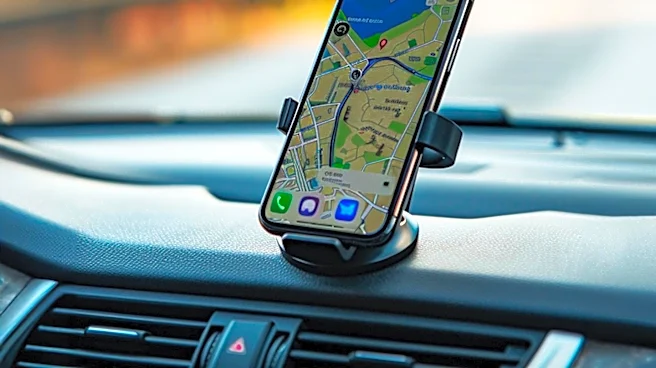
The widespread use of G.P.S. technology is fundamentally changing how people navigate and perceive their surroundings. According to a report, reliance on G.P.S. has led to a decline in cognitive mapping skills, which are essential for understanding spatial
environments through landmarks. Mary Hegarty, a psychologist at the University of California, Santa Barbara, highlights that G.P.S. encourages a stimulus-response navigation strategy, which is different from cognitive mapping. Studies have shown that individuals using G.P.S. are less capable of recalling routes or recognizing landmarks compared to those who navigate without it. This shift in navigation strategy is supported by research from McGill University, which found that frequent G.P.S. users performed poorly in spatial memory tasks. The report also discusses how G.P.S. disruptions in Israel served as a natural experiment, revealing that a significant portion of people struggled to reach their destinations without G.P.S. assistance.
Why It's Important?
The increasing dependence on G.P.S. technology has significant implications for human cognitive abilities and spatial awareness. As people rely more on digital navigation tools, there is a potential decline in traditional navigation skills, which could affect various aspects of daily life and safety. The ability to navigate without digital assistance is crucial in situations where technology fails or is unavailable. Furthermore, the psychological impact of always being at the center of a digital map may alter individuals' perception of their place in the world, potentially affecting decision-making and problem-solving skills. This shift could have broader societal implications, influencing how people interact with their environments and each other.
What's Next?
As G.P.S. technology continues to evolve, there may be a need for educational initiatives to balance digital navigation with traditional skills. Encouraging activities that promote cognitive mapping, such as orienteering or map reading, could help mitigate the decline in spatial awareness. Additionally, further research into the cognitive effects of G.P.S. reliance could inform the development of navigation tools that support rather than replace intrinsic navigation strategies. Policymakers and educators might consider integrating spatial awareness training into curricula to ensure future generations retain essential navigation skills.
Beyond the Headlines
The cultural and ethical dimensions of G.P.S. reliance are worth exploring. As technology increasingly mediates human interaction with the environment, there is a risk of losing touch with natural navigation instincts and the ability to engage with the world on a deeper level. This could lead to a homogenization of experiences, where individuals are less likely to explore and discover new places independently. The ethical considerations of data privacy and security also come into play, as G.P.S. technology often involves tracking and storing user location data, raising concerns about surveillance and personal privacy.