
What's Happening?
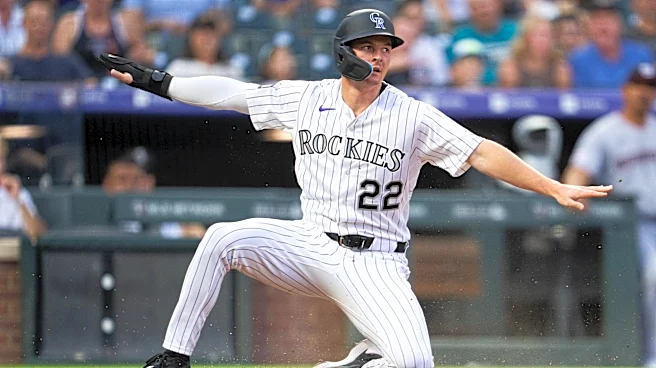
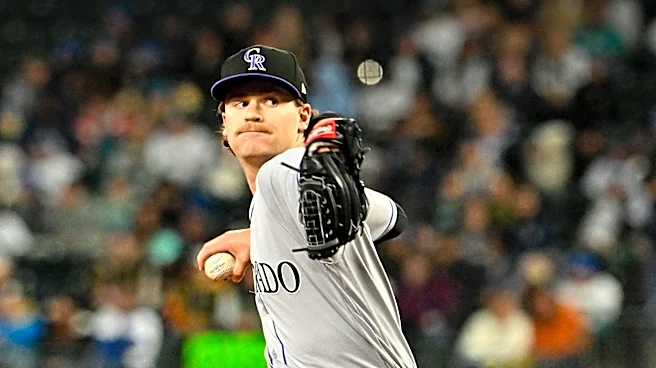
Colorado Rockies president of baseball operations Paul DePodesta has indicated that the team has not ruled out bringing back pitcher Kyle Freeland, who became a free agent after the 2026 season. Freeland, a Denver native, has a long history with the Rockies,
including a standout 2018 season where he went 17-7 with a 2.85 ERA and finished fourth in National League Cy Young Award voting. However, his recent performance has declined significantly, with a 4-12 record and a 6.65 ERA over 135 1/3 innings in 2026, following a 4.98 ERA in 2025. Despite his struggles, manager Warren Schaeffer has praised Freeland's leadership, and Freeland himself expressed a desire to spend his entire career in Colorado. DePodesta acknowledged Freeland's contributions to the organization, keeping the possibility of a reunion open.
Why It's Important?
The potential reunion with Kyle Freeland presents a dilemma for the Rockies: balancing sentimental value and past contributions with current performance and future team needs. While Freeland's leadership and understanding of pitching at Coors Field are valuable assets, his recent statistics suggest he may no longer be a reliable front-line starter. For the Rockies, who are in a rebuilding phase after multiple losing seasons, investing in a declining veteran could hinder the development of younger pitchers who need meaningful innings. The decision will reflect the team's strategic priorities: whether to prioritize experienced leadership and a connection to the city or to fully commit to a youth movement aimed at long-term competitiveness. This choice could impact team morale, fan perception, and the overall direction of the franchise.
What's Next?
The Rockies' front office will need to determine the role and financial commitment they are willing to offer Kyle Freeland, if any. While DePodesta has left the door open, it is unlikely Freeland would be guaranteed a spot in the rotation given his recent performance. He might be considered for a more modest contract, potentially competing for a spot or serving as a mentor to younger pitchers. The team's focus remains on building a competitive future, which necessitates evaluating all roster decisions based on current ability and potential impact. Freeland will also assess his options in free agency, weighing his desire to remain in Colorado against potential opportunities elsewhere.
Beyond the Headlines
The discussion around Kyle Freeland's potential return highlights a common challenge in professional sports: how to manage the careers of long-tenured, beloved players whose performance has declined. Teams often face pressure from fans and within the organization to honor past contributions, but the business of sports demands objective evaluation of current value. This situation also touches on the emotional aspect of player-team relationships, where a player's desire to stay with one franchise for their entire career meets the team's need to constantly evolve and improve. The Rockies' ultimate decision will set a precedent for how they handle similar situations with other veteran players in the future, balancing loyalty with strategic imperatives.