

What's Happening?
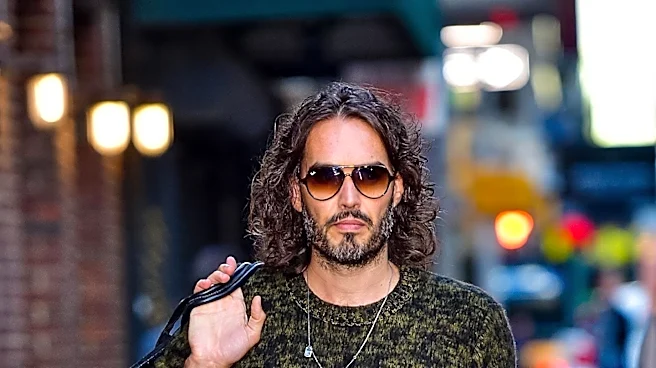
Netflix is currently facing significant criticism for its decision to keep Russell Brand's 2018 stand-up special, 'Russell Brand: Re,' available in its streaming catalog. This backlash follows Brand's recent conviction for rape and sexual assault. While
the special remains accessible, reports from LBC and NME indicate that Netflix has removed it from search results and stopped recommending it to subscribers, making it less visible. The hour-long performance, filmed at London’s Hackney Empire, features Brand discussing his life after becoming a father and is classified as TV-MA. A source within Netflix reportedly stated to The Telegraph that the decision to retain the program is based on providing subscribers control over their viewing choices. This stance has drawn comparisons to Netflix's previous actions regarding Kevin Spacey, who was dropped from 'House of Cards' and had his film 'Gore' shelved after sexual misconduct allegations emerged in 2017.
Why It's Important?
The controversy surrounding Netflix's decision highlights a significant debate within the entertainment industry regarding content moderation and accountability for creators accused or convicted of serious crimes. The differing approaches taken by Netflix in the cases of Russell Brand and Kevin Spacey raise questions about the consistency of the platform's policies and its ethical responsibilities. For subscribers, it sparks discussions about what content platforms should host, especially when it involves individuals facing severe legal repercussions. The situation also impacts public perception of Netflix, potentially affecting its brand image and subscriber loyalty among those who believe the content should be removed. Furthermore, it brings to the forefront the financial implications for artists, as questions arise about whether Brand continues to receive payments from the special, even after his conviction.
What's Next?
Netflix will likely continue to monitor public reaction and internal discussions regarding the Russell Brand special. The company may face ongoing pressure from advocacy groups and subscribers to remove the content entirely, potentially leading to a re-evaluation of its content retention policies for individuals convicted of serious offenses. The decision could also influence how other streaming platforms handle similar situations in the future, setting a precedent for content moderation in the wake of criminal convictions. Stakeholders, including content creators, legal experts, and subscriber groups, will be closely watching Netflix's next moves, which could range from maintaining the current hidden status to outright removal, or even issuing a public statement clarifying their policy on such matters.
Beyond the Headlines
This situation delves into the complex intersection of artistic freedom, corporate responsibility, and public morality. While Netflix cites subscriber control as a reason for retaining the special, the act of hiding it from search results suggests an acknowledgment of the controversy without fully committing to its removal. This nuanced approach reflects the challenge media companies face in balancing consumer choice with ethical considerations and public outcry. The differing treatment of Brand and Spacey could also spark broader conversations about how allegations and convictions of various types of misconduct are handled across the entertainment industry, potentially leading to calls for more standardized and transparent policies. It also touches upon the 'cancel culture' debate, examining the extent to which an artist's personal conduct should impact the availability of their past work.