




What's Happening?
A new national survey commissioned by Trex Company indicates that 74% of U.S. homeowners are choosing to remain in their current homes and transform them into their 'dream homes,' rather than relocating due to economic pressures like high mortgage rates
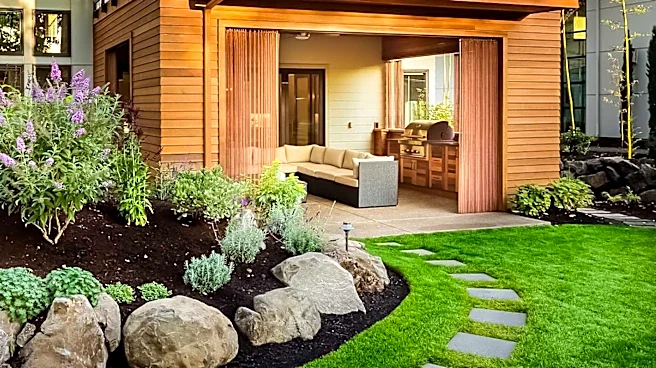
or a tight housing market. The survey, conducted by Atomik Research among 2,000 single-family homeowners, found that 55% plan to renovate rather than move, while only 8% intend to move without prior improvements. This shift is driven by lifestyle preferences, with homeowners valuing relaxation (65%), fresh air (64%), and a place to unwind (60%). Outdoor living spaces, particularly backyards and patios, are identified by over half of respondents (54%) as more effective for de-stressing than any other room in the house. The data suggests that for many, staying is a deliberate strategy focused on enhancing quality of life rather than a forced decision.
Why It's Important?
This survey challenges the prevailing assumption that homeowners are 'stuck' in their current residences solely due to economic constraints. Instead, it highlights a significant shift in consumer priorities, where emotional connection and lifestyle benefits derived from homeownership are as important, if not more so, than financial returns. This trend has substantial implications for the U.S. housing and home improvement markets. It suggests a sustained demand for renovation and remodeling services, particularly those focused on enhancing outdoor living spaces. Businesses in construction, landscaping, and home furnishings stand to benefit from this 'stay era,' as homeowners invest in creating personalized sanctuaries. Furthermore, the emphasis on community and neighborhood ties as reasons for staying indicates a potential strengthening of local economies and social cohesion, as residents become more invested in their immediate surroundings rather than seeking new ones.
What's Next?
The findings from the Trex survey suggest a continued boom in the home renovation sector, particularly for projects that enhance outdoor living and overall quality of life. Manufacturers and retailers of home improvement products, especially those for outdoor spaces, can anticipate sustained demand. Companies like Trex, which specializes in wood-alternative decking, are well-positioned to capitalize on this trend. Marketing strategies in the housing sector may shift to emphasize the emotional and lifestyle benefits of home improvement, rather than solely focusing on property value appreciation. Additionally, urban planners and community developers might see an increased desire among residents to invest in and improve their existing neighborhoods, potentially leading to more localized community development initiatives and services. The survey also implies that the housing market may experience less churn, with fewer homes coming onto the market as homeowners opt to improve rather than move.
Beyond the Headlines
The 'stay era' revealed by the Trex survey points to a deeper societal re-evaluation of what 'home' truly means. Beyond a financial asset or a temporary dwelling, homes are increasingly viewed as personal sanctuaries and centers for well-being. This psychological shift could lead to a more stable and rooted population, fostering stronger community bonds and local engagement. It also highlights a growing appreciation for the immediate environment and the potential for personalizing living spaces to meet evolving lifestyle needs. The concept of 'deck envy' underscores the social aspect of home improvements, where outdoor spaces become a point of pride and a reflection of personal investment. This trend could also influence urban planning, encouraging the development of amenities and infrastructure that support long-term residency and community building, rather than solely focusing on transient populations or rapid development.