






What's Happening?
AMD CEO Lisa Su announced at the Open Compute Project summit that she has increased her forecast for the 2030 server CPU market to over $200 billion, marking the third upward revision in nine months. This revised outlook reflects a significant surge in demand
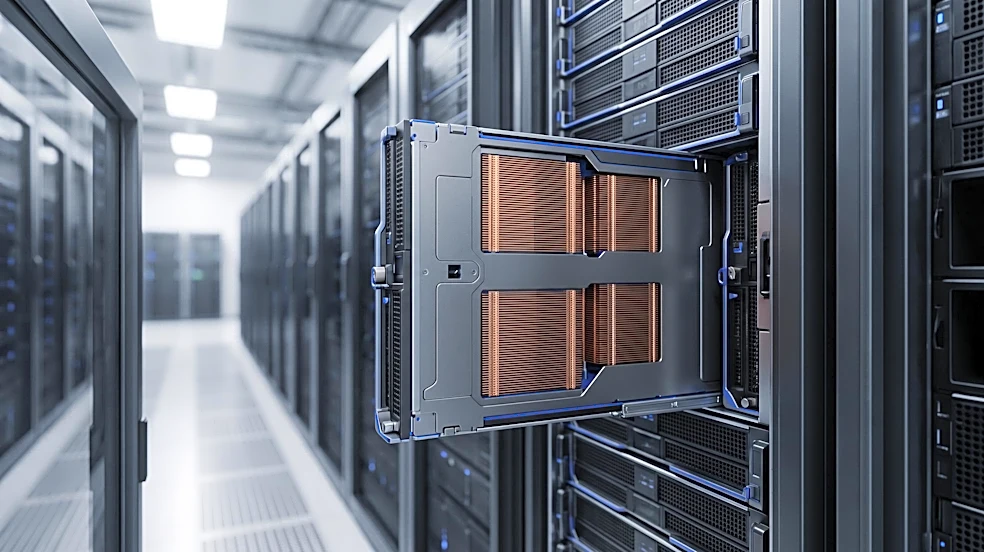
for central processing units (CPUs), particularly driven by the rise of AI agents. The demand for CPUs is no longer solely about feeding GPUs but also about providing the necessary processing power for AI systems to perform complex tasks beyond text generation, such as opening files, running programs, querying databases, and managing security. This shift is leading to a re-evaluation of the CPU's role in AI infrastructure, with inference servers now carrying more CPUs per GPU than traditional training servers. Even Nvidia, a leader in GPUs, anticipates nearly $20 billion in CPU revenue this fiscal year, indicating a broader industry trend.
Why It's Important?
The increased forecast for the server CPU market underscores a fundamental shift in the architecture and demands of AI computing. While GPUs have been central to AI model training, the growing complexity of AI agents and their need to interact with various systems means that CPUs are becoming equally critical for efficient operation. This development is important for AMD as it positions the company to capitalize on a burgeoning market segment beyond its traditional GPU strengths. The 'return of the CPU' signifies that the bottleneck in AI performance is no longer solely with the GPU but also with the general-purpose processing required to execute AI agent instructions. This creates new opportunities for CPU manufacturers and highlights the need for integrated solutions that optimize both GPU and CPU performance within AI systems. The trend also suggests that companies that can offer robust and efficient CPU solutions for AI workloads will gain a significant competitive advantage.
What's Next?
The industry is expected to see continued innovation in CPU design, with manufacturers focusing on optimizing processors for AI agent workloads, balancing cores, memory, and power consumption. This will likely lead to a more diverse range of CPU offerings tailored for specific AI tasks. Cloud giants, already designing their own server CPUs, are expected to further invest in in-house solutions to achieve cost savings and performance efficiencies at scale. For independent chipmakers, the challenge will be to differentiate their offerings and secure partnerships with system integrators and cloud providers. The ongoing 'wheel of reincarnation' in computing, where tasks shift between specialized hardware and general-purpose processors, will continue to shape the development of AI infrastructure. Investors will be monitoring how this evolving landscape impacts market share and revenue for key players in the semiconductor industry.
Beyond the Headlines
The resurgence of the CPU in the AI era highlights a deeper implication: AI is moving beyond theoretical models to practical applications that require extensive interaction with real-world systems. This necessitates a more balanced and integrated approach to computing, where both specialized accelerators and general-purpose processors play crucial roles. The 'CPU bottleneck' is not just about raw processing speed but also about memory management, data movement, and the ability to handle diverse software environments. This complexity could lead to new standards and architectures for AI systems, potentially fostering collaboration or intense competition among chipmakers. Furthermore, the increasing demand for CPUs for AI agents could have implications for energy consumption and data center design, pushing for more efficient and sustainable computing solutions. The strategic importance of controlling the 'scarce interface' within these complex systems will be a key factor in determining future market leaders.