

What's Happening?
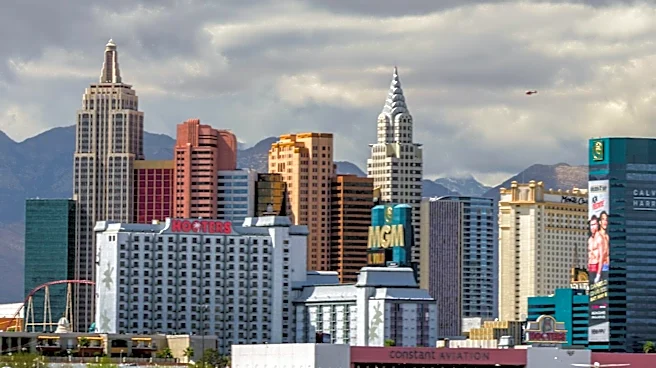
Metallica, the thrash metal band, conducted their rehearsals for their Las Vegas Sphere residency during late-night hours to avoid disrupting 'The Wizard of Oz' production, which was also in residency at the venue. Bassist Robert Trujillo humorously referred
to 'The Wizard of Oz' as their 'boss' due to the scheduling conflict. The band undertook a month of preparation, starting with running through chosen songs at their headquarters, including deeper cuts like 'Devil's Dance' and 'The Outlaw Torn.' Following this, they spent about a week testing the massive stage terrain in a radio arena in Santa Rosa without visuals. Upon arriving in Las Vegas, their rehearsal schedule shifted to approximately 11:30 PM to 4:00 AM, with meetings extending until 4:30 or 5:00 AM. The crew's shifts were from 9:00 PM to 6:00 AM. The first 12-date run of their 'Life Burns Faster' shows recently concluded, and a second run is scheduled to begin on January 28.
Why It's Important?
This situation highlights the logistical complexities and scheduling challenges inherent in operating multi-faceted entertainment venues like the Las Vegas Sphere, especially when multiple high-profile productions are in residency. For musical acts like Metallica, adapting to unconventional rehearsal times, such as overnight sessions, is crucial for ensuring the quality and technical precision of their performances in a state-of-the-art venue. The need for extensive preparation, including familiarizing themselves with the unique stage and technical demands of the Sphere, underscores the significant investment and effort required to deliver a world-class show. This also sheds light on the hierarchy of scheduling within such venues, where established productions might dictate the availability for other acts, impacting their operational workflow and potentially increasing costs associated with late-night staffing and specialized arrangements. The band's commitment to these rigorous schedules demonstrates the high stakes involved in major residencies and the dedication required to meet audience expectations.
What's Next?
Metallica's second run of 12 Sphere shows is set to commence on January 28. This upcoming series of performances will continue to showcase the band's adaptation to the unique demands of the Las Vegas Sphere, building on the experience gained from their initial run. The band will likely maintain their rigorous preparation and performance schedule, potentially continuing the late-night rehearsals if 'The Wizard of Oz' or another production remains in residency. The success of these residencies often leads to further engagements or influences other major artists to consider similar long-term commitments in high-tech venues. Fans can anticipate a continuation of the 'Life Burns Faster' shows, featuring a mix of their well-known hits and deeper cuts, as the band further refines their presentation within the immersive environment of the Sphere. The logistical lessons learned from this experience could also inform future scheduling and operational strategies for the venue and other artists.
Beyond the Headlines
The scenario of Metallica rehearsing overnight due to another production's schedule at the Sphere points to a broader trend in the entertainment industry: the increasing demand for and complexity of immersive, technologically advanced live experiences. Venues like the Sphere are pushing the boundaries of live performance, requiring artists to not only deliver musically but also to integrate seamlessly with cutting-edge visual and auditory technologies. This necessitates extensive technical rehearsals and coordination, often leading to unconventional working hours and significant logistical challenges. The 'Wizard of Oz' being the 'boss' in this context illustrates the economic power and established presence of certain productions, which can influence the operational dynamics for other acts, even those as globally renowned as Metallica. This highlights the evolving landscape of live entertainment, where technological innovation and venue-specific demands are reshaping how artists prepare and perform, potentially setting new standards for production quality and operational flexibility across the industry.