
What's Happening?
Andrea Ferro, the lead singer of the Italian metal band Lacuna Coil, has expressed his views on the current challenges facing the music industry, particularly for rock and metal bands. In a recent interview, Ferro discussed how the shift from traditional
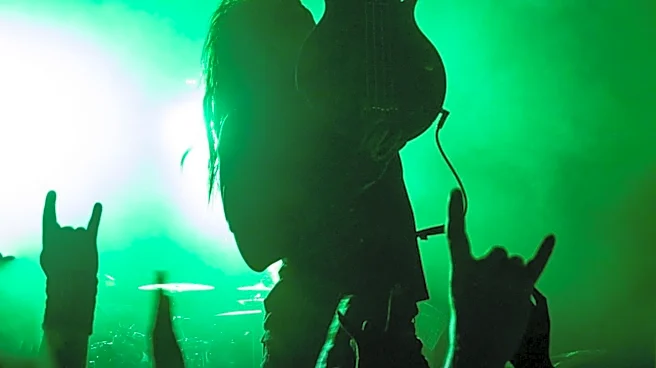
media to social media has changed the way bands gain exposure and sell music. He noted that while the attention span of audiences has decreased, leading to a demand for quick and new content, metal bands have managed to maintain a high standard of quality in their music. Ferro reminisced about the earlier days of Lacuna Coil, when building a fanbase involved extensive touring and personal engagement, contrasting it with today's fast-paced digital environment.
Why It's Important?
The insights shared by Ferro underscore a significant shift in the music industry, where digital platforms have replaced traditional media as the primary means of music distribution and promotion. This change has made it easier for bands to gain rapid fame but also poses the risk of quick obsolescence. The emphasis on maintaining quality in metal music, as highlighted by Ferro, suggests that despite these challenges, some genres continue to prioritize artistic integrity over commercial success. This could influence how new bands approach their careers, potentially leading to a resurgence in live performances and direct fan engagement as a means to build lasting connections.
What's Next?
Lacuna Coil is set to continue their engagement with fans through a series of festival appearances in 2026 and planned shows in 2027. This approach aligns with Ferro's belief in the importance of live performances for building a sustainable career. As the music industry continues to evolve, it will be crucial for bands to find a balance between leveraging digital platforms for exposure and maintaining the quality and authenticity that fans appreciate. The ongoing commitment of bands like Lacuna Coil to live performances may inspire other artists to adopt similar strategies.
Beyond the Headlines
Ferro's comments also touch on broader cultural implications, such as the impact of digital media on consumer behavior and the arts. The shift towards instant gratification and shorter attention spans could have long-term effects on how art is created and consumed. This raises questions about the sustainability of current industry practices and the potential need for a return to more traditional methods of audience engagement. Additionally, the emphasis on quality in metal music could serve as a model for other genres facing similar challenges.