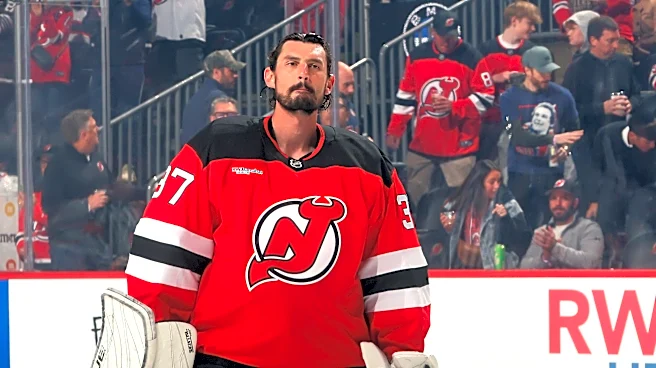








What's Happening?
The New Jersey Devils have made the decision to bench their star goalie, Connor Hellebuyck, for his anticipated return game against his former team, the Winnipeg Jets. The announcement came from Devils general manager Sunny Mehta after the team's 4-0
victory over the Toronto Maple Leafs. Mehta stated that starting Hellebuyck in Winnipeg "would potentially give [the Devils] a reduction in [their] expected win probability." This decision has drawn significant criticism and mockery from the hockey world. Devils head coach Sheldon Keefe also commented, attributing the decision to managing Hellebuyck's workload, noting it would have been his fourth start in eight days. Hellebuyck, who publicly requested a trade at the start of training camp, expressed disappointment but acknowledged understanding the team's perspective, stating he would have liked to play in Winnipeg. To mitigate backlash, the Devils are allowing Hellebuyck to hold a press conference before the game.
Why It's Important?
This decision by the New Jersey Devils is significant because it prioritizes a perceived statistical advantage in win probability over the narrative and emotional aspects of a player's return to his former team. It highlights a growing trend in professional sports where advanced analytics heavily influence roster decisions, even in high-profile situations. The backlash from fans and media suggests a disconnect between purely analytical decision-making and the human element of sports, which often values narrative, player sentiment, and competitive spirit. The Devils' reasoning has been widely criticized as an attempt to avoid potential negative fan reaction towards Hellebuyck in Winnipeg, rather than a genuine strategic move. This incident could influence how other teams approach similar situations, weighing the public relations impact against analytical justifications for player management.
What's Next?
The immediate consequence will be the Devils playing against the Winnipeg Jets without Connor Hellebuyck in net, likely leading to increased scrutiny on the performance of the replacement goalie and the team as a whole. Hellebuyck's pre-game press conference will be closely watched for any further comments on his feelings about the decision. The incident is likely to fuel ongoing discussions within the NHL and sports media about the balance between analytics, player welfare, and the emotional aspects of the game. Other teams might observe the public reaction to this decision when considering similar player management strategies in the future. The long-term impact on team morale and Hellebuyck's relationship with the Devils organization remains to be seen, especially if the team's performance is affected.
Beyond the Headlines
This event touches upon deeper themes regarding the professional athlete's agency versus team control, and the evolving role of data analytics in sports. While analytics aim to optimize performance, this situation demonstrates how a purely data-driven approach can sometimes clash with traditional sports narratives and fan expectations. The decision to bench Hellebuyck, ostensibly to protect win probability, could be perceived as a lack of confidence in the player's ability to perform under pressure or an attempt to shield him from a potentially hostile environment. This raises questions about how teams manage player psychology and public perception in an increasingly data-centric sports world. It also highlights the tension between the desire for competitive advantage and the preservation of the sport's inherent drama and human interest stories.