



What's Happening?
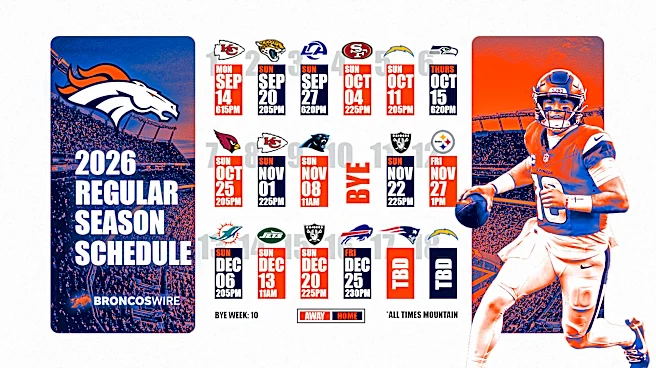
NBC has announced that 'The Tonight Show Starring Jimmy Fallon' will air four special Sunday editions this fall, immediately following 'Sunday Night Football' broadcasts and local news. The first of these specials is scheduled for September 27, following the Los
Angeles Rams vs. Denver Broncos game, and will feature guests Sylvester Stallone and Luke Bryan. Additional Sunday episodes are planned for November 8, November 15, and January 10, with guests for these dates to be announced later. This strategy revives a successful approach from last fall, where similar post-NFL episodes ranked among the show's highest-rated. Furthermore, 'The Tonight Show' will also air a regular episode on September 9, following the NFL Kickoff game, featuring Matthew McConaughey, Alix Earle, and a musical performance by Riley Green. The show's digital presence continues to grow, with over 900 million social views from sports-related content in the past year, and linear ratings are up 18% this summer compared to last year, with digital and social views increasing by 15%.
Why It's Important?
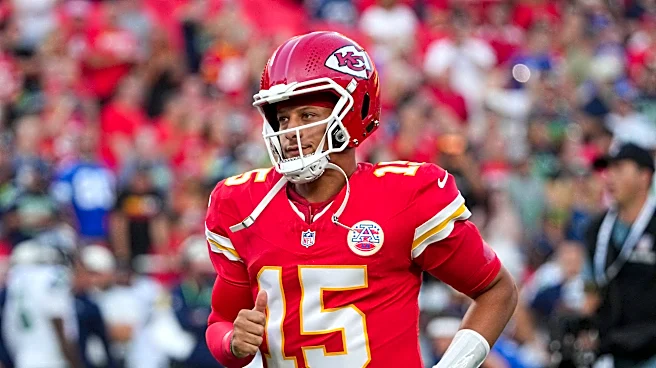
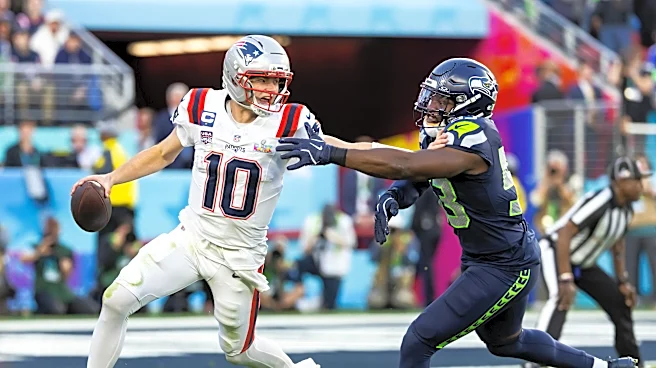
This strategic scheduling by NBC leverages the immense viewership of 'Sunday Night Football,' which has consistently been the top primetime program for 15 consecutive seasons. By placing 'The Tonight Show' directly after these high-profile games, NBC aims to capture a significant portion of the football audience, potentially boosting the late-night show's ratings and expanding its reach. This move is crucial for 'The Tonight Show' as it seeks to maintain and grow its audience in a competitive late-night landscape, especially given its already strong digital performance. The inclusion of celebrity guests like Sylvester Stallone and Matthew McConaughey further enhances the appeal, drawing in both sports fans and general entertainment viewers. For advertisers, this provides a valuable opportunity to reach a large, engaged audience across both sports and entertainment demographics, potentially leading to increased ad revenue for NBC. The success of this strategy could influence how other networks schedule their late-night programming in conjunction with major sporting events.
What's Next?
The immediate next steps involve the airing of the first special Sunday edition on September 27, followed by subsequent specials on November 8, November 15, and January 10. NBC will likely announce additional guests for these later Sunday episodes as the dates approach. The performance of these specials in terms of viewership and engagement will be closely monitored by NBC and the industry, as it will determine the long-term viability and expansion of this scheduling strategy. Should these episodes continue to perform well, it is probable that NBC will continue this practice in future NFL seasons. The show's ongoing digital growth, particularly in sports-related content, suggests a continued focus on integrating sports figures and themes into its programming to capitalize on this engagement. The regular episode following the NFL Kickoff game on September 9 will serve as an early indicator of audience reception to this integrated programming approach.
Beyond the Headlines
This move highlights a broader trend in television programming where networks are increasingly integrating live sports with entertainment content to maximize audience retention and engagement. In an era of fragmented viewership and on-demand streaming, live sports remain one of the few programming types that consistently draw large, live audiences. By strategically placing 'The Tonight Show' after 'Sunday Night Football,' NBC is not just seeking to boost ratings but also to create a seamless viewing experience that transitions viewers from high-energy sports to lighthearted entertainment. This strategy also underscores the growing importance of digital and social media engagement for traditional television shows, as 'The Tonight Show' actively leverages its online presence to complement its linear broadcasts. The success of this cross-promotion could set a precedent for how other networks approach scheduling and content integration, blurring the lines between different genres of programming and creating new opportunities for audience capture and monetization in a rapidly evolving media landscape.